Armenia Versus Mozambique Two Flags: Design, Symbolism, and Practical Comparisons
Flags serve as powerful visual identifiers, condensing history, culture, and national values into a single design. For professionals in marketing, education, design, and content creation, understanding the nuanced differences between flags can inform better visual choices and more accurate representations. The comparison of Armenia versus Mozambique two flags offers a compelling case study in how distinct national identities express themselves through color, pattern, and symbolism. This examination goes beyond surface-level aesthetics, looking at the practical value these flags bring to real-world projects, from branding collateral to educational materials.
The Armenian Flag: Tricolor with Deep Heritage
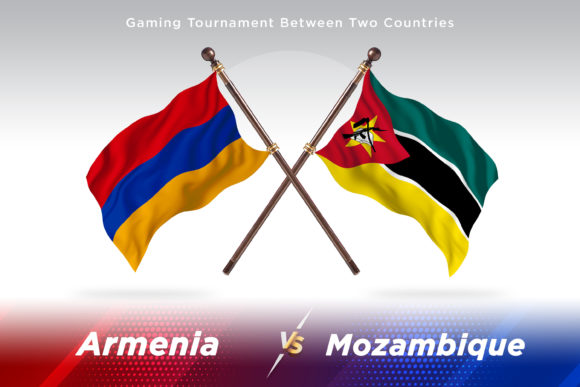
The national flag of Armenia consists of three equal horizontal bands of red, blue, and orange (apricot). This tricolor was officially adopted on August 24, 1990, but its roots trace back to the early 20th-century Armenian Republic. The red symbolises the Armenian Highland, the struggle for survival, and the blood of the martyrs. Blue represents the sky and peace, while orange denotes courage and the nation's creative talent. The design is clean, proportional, and instantly recognizable within the region. For designers and publishers, the Armenian flag offers a straightforward yet meaningful palette that works well in both digital and print contexts.
The Mozambican Flag: Dynamic Symbolism with Modern Roots
Mozambique's flag features three horizontal stripes of green, black, and yellow, a white border, and a red triangle on the hoist side containing a yellow star, an open book, and a crossed hoe and AK-47. Adopted in 1983, it is one of the most symbolically dense national flags in the world. The green represents the land's fertility, black stands for the African continent, yellow for mineral wealth, white for peace, and red for the struggle for independence. The star symbolises socialism, the book highlights education, the hoe represents agriculture, and the AK-47 signifies defence and vigilance. This complexity makes it a rich subject for analysis but also a practical challenge for reproduction at small scales.
Key Characteristics and Purpose of Comparing Two Flags
When evaluating Armenia versus Mozambique two flags, the primary purpose is often educational or design-oriented. A vexillologist might study how symmetry versus complexity affects flag recognition. A graphic designer might compare how each flag handles color contrast and scalability. An educator might use both flags to teach about national identity and historical context. The core strength of placing these two flags side by side lies in the contrast they offer: one is minimalist and purely chromatic, the other is layered with figurative elements and political history.
From a practical standpoint, the Armenian flag excels in versatility. Its three-color horizontal band is easy to render in any medium, from fabric to screen, and resists distortion when scaled down. The Mozambican flag, meanwhile, requires careful attention to detail. The AK-47, book, and hoe inside the red triangle can become illegible if reproduced too small or in low-resolution formats. This distinction is critical for marketers creating flag-based merch, for bloggers writing about travel or international affairs, and for small business owners who want to use flags in presentations or signage without misrepresenting them.
Visual Impact and Recognition
For professionals who need flags to communicate quickly, the Armenian flag's simplicity is a clear advantage. Its bold red-blue-orange sequence is easy to identify from a distance and in poor lighting. The Mozambican flag, while striking due to its dense iconography, requires a closer look. However, that same complexity can be a strength in educational materials or cultural exhibitions where storytelling matters. When comparing Armenia versus Mozambique two flags in a marketing campaign for a multicultural event, the choice should depend on the audience's familiarity and the context of use.
Flexibility Across Media
Digital creators and freelancers often need flag vectors that scale cleanly. The Armenian flag adapts well to both hero images and thumbnail sizes. The Mozambican flag, on the other hand, demands high-resolution source files to ensure the AK-47 and book remain distinguishable. Many free vector repositories provide low-quality versions of complex flags, so serious publishers should source from reputable vexillology databases or purchase premium vectors. This is a practical consideration that many hobbyists and small business owners overlook.
Consistency and Reliability
Both flags have official specifications published by their respective governments. The Armenian flag uses a standard set of color codes (Pantone, CMYK, RGB) and strict proportions (1:2). The Mozambican flag also has defined coordinates for the triangle's position and the emblems' placement. Following these guidelines ensures accuracy, which is essential for educators and historians. Using an incorrect shade of blue or orange for Armenia, or misaligning the Ak-47's angle on Mozambique's flag, can undermine credibility in professional publications.
Graphic Designers and Marketers
Anyone working on international branding, travel guides, or event materials will find the Armenia versus Mozambique two flags comparison useful. Designers can study how to balance minimalism with storytelling. For example, a tourism brochure focusing on Armenia might emphasize the flag's apricot hue, while a history poster on Mozambique might highlight the symbolism of the AK-47. Marketers launching campaigns targeting Armenian or Mozambican audiences must understand the flag's proper display and cultural weight to avoid unintentional disrespect.
Educators and Content Creators
Teachers developing geography or civics lesson plans can use the two flags to illustrate different approaches to national identity. The Armenian flag connects to ancient history (the color apricot is unique to Armenian heritage), while the Mozambican flag is distinctly modern and reflects a post-independence revolutionary spirit. Bloggers writing about vexillology, world cultures, or flag etiquette can draw on these contrasts to create engaging, authoritative posts.
Small Business Owners and Entrepreneurs
For a small cafe offering global coffee beans, using flags on a menu board adds visual interest. Understanding the practicality of flag reproduction helps avoid a blurred or distorted image. A business owner printing flags for a multicultural fair will appreciate that the Armenian flag is easier to sew accurately, while the Mozambican flag might need professional embroidery to capture detail.
Potential Limitations and Realistic Challenges
No comparison is complete without acknowledging drawbacks. The Mozambican flag's reliance on a specific firearm as a national symbol can be polarising in some contexts. Some audiences may find the AK-47 objectionable, which limits its use in certain branding or peaceful event settings. Additionally, the flag's complex design often fails legibility tests when displayed among dozens of other flags in a conference room or as a tiny emoji. The Armenian flag faces fewer such issues, though its similarity to other tricolours (like the flag of Armenia's historical neighbor Iran or the horizontally striped flag of Tajikistan) means it can be confused without close inspection.
Another limitation is that both flags have specific cultural sensitivities. Misusing either—for example, flying the Armenian flag upside down (which would be a sign of distress but is poorly understood) or using the Mozambican flag as a decorative pattern for clothing—could offend nationals. Professionals should research flag etiquette for each country before any public use.
Practical Recommendations for Integrating These Flags
- For digital and web use: Source SVG files from official government websites or vexillology repositories like Flags of the World. Avoid raster images for Mozambique's flag unless at high resolution (> 1000px wide).
- For print and merchandise: Use Pantone color matches: Armenia's red (Pantone 186C), blue (Pantone 286C), and orange (Pantone 1585C). Mozambique's green (Pantone 355C), black (Process Black C), yellow (Pantone 116C), and red (Pantone 185C).
- For educational content: Present both flags together to highlight contrasts. Explain the symbolism of each element. Use a scale comparison graphic to show how size affects readability.
- For marketing campaigns: If featuring both countries, ensure the flags are displayed with equal prominence. Avoid superimposing text over the emblem-heavy Mozambican flag, as it may obscure key icons.
These recommendations help maintain accuracy and respect, which is vital for building trust with an audience that may include citizens of either nation.
Long-Term Value and Relevance
The Armenia versus Mozambique two flags comparison offers lasting value because it illustrates a fundamental design tension: minimalism versus complexity. As visual culture evolves, understanding how national symbols adapt to digital constraints will remain relevant. For freelancers building a portfolio of international graphics, for publishers creating inclusive travel content, and for educators fostering global awareness, this comparison is a practical tool. It also serves as a reminder that every flag has a story, and choosing the right representation can make a project more authentic and engaging.
Ultimately, the decision to use one flag over another—or to present both—should be guided by the specific goals, audience, and medium. When handled with care and knowledge, even a straightforward comparison like Armenia versus Mozambique two flags becomes a resource that adds depth and credibility to professional work.