Aruba Versus Honduras Two Flags: Design, Symbolism, and Meaning
Flags are more than colored cloth. They carry history, identity, and pride in every stripe and star. When you look at the flags of Aruba and Honduras side by side, you see two distinct visual languages. One speaks of Caribbean light and independence. The other reflects Central American unity and a turbulent past. Comparing Aruba versus Honduras two flags reveals how geography, colonial history, and national aspirations shape design choices in surprisingly different ways.
Whether you are a traveler curious about the islands, a student researching national symbols, or a designer looking for fresh inspiration, understanding these flags gives you a richer perspective on two fascinating places. Let us break down what each flag means, how they differ, and why those differences matter.
What the Aruba Flag Represents
The flag of Aruba was officially adopted on March 18, 1976. That date is now celebrated as Flag Day on the island. Before this flag, Aruba used the flag of the Netherlands Antilles. The decision to create a distinct flag came as Aruba pushed for greater autonomy within the Kingdom of the Netherlands.
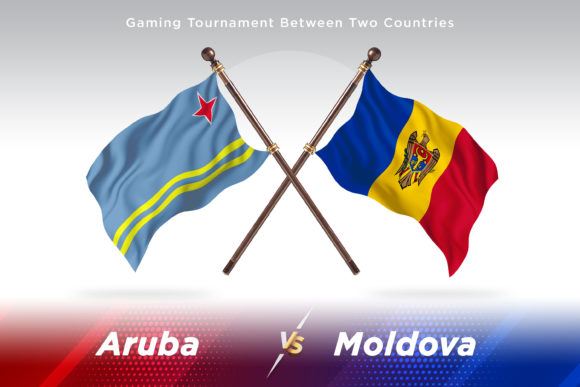
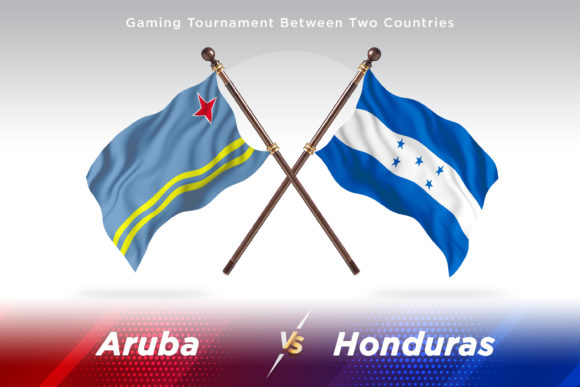
The design is clean and purposeful. A light blue field covers the background. In the lower left corner sits a bold red four-pointed star outlined in white. Two narrow yellow horizontal stripes run across the lower half of the flag.
Every element has meaning. The light blue represents the sky above Aruba but also the surrounding Caribbean Sea. More symbolically, it stands for peace and hope. The yellow stripes have a dual meaning: they evoke the island's golden sunshine and also its historical reliance on the aloe vera and gold mining industries. The red star carries the most layered symbolism. Each of its four points represents the four cardinal directions, inviting travelers from all over the world. The star itself stands for the island itself, surrounded by white sand beaches. The red color honors the blood spilled by Arubans during wartime, as well as the local flora. The white border on the star signifies purity and honesty.
Aruba deliberately avoided using the Dutch colors of red, white, and blue in a way that would mimic the Netherlands flag. Instead, it created something fresh that still acknowledged its Caribbean identity.
What the Honduras Flag Represents
The flag of Honduras has deeper historical roots. It was first adopted in 1866 and is based on the flag of the Federal Republic of Central America, which existed from 1823 to 1841. This shared heritage means Honduras flag closely resembles those of its neighbors El Salvador, Nicaragua, Costa Rica, and Guatemala.
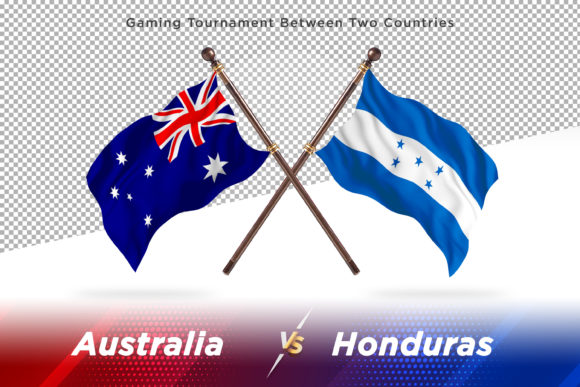
The design uses three horizontal bands. Two outer bands are cerulean blue. The middle band is white. At the center of the white band sit five five-pointed stars arranged in an X pattern. That pattern is known as a saltire.
The blue stripes represent the Pacific Ocean and the Caribbean Sea that border Honduras to the west and east. The white stripe stands for peace, prosperity, and the purity of the nation's intentions. The five stars hold a powerful historical meaning. They represent the five original member states of the Federal Republic of Central America: Costa Rica, El Salvador, Guatemala, Honduras, and Nicaragua. The central star in the X pattern represents Honduras itself. This design expresses the hope that one day those five nations might reunite into a single federal republic. The arrangement of the stars in a saltire also echoes the shape of the letter X, which in some interpretations stands for the unknown potential of the nation's future.
Unlike Aruba, Honduras flag uses a darker, more saturated cerulean blue that conveys gravity and stability. The overall feel is formal and weighty, grounded in a shared regional identity rather than a distinct break from the past.
Key Differences at a Glance
When you place Aruba versus Honduras two flags next to each other, the most obvious difference is the color palette. Aruba uses a pale, airy blue. Honduras uses a deep, vivid blue. Aruba introduces yellow and red, while Honduras sticks to a restrained blue-and-white scheme with a small dash of blue for the stars.
The structural layout also differs sharply. Aruba uses a field with a canton-style emblem in the lower left, plus horizontal stripes. Honduras uses a classic tricolor layout with three horizontal bands and a central emblem. Aruba design feels modern and playful. Honduras design feels traditional and uniformed.
The symbolism also diverges. Aruba emphasizes sunshine, tourism, and local industries. Honduras emphasizes regional unity, maritime borders, and historical federation. Aruba flag is about looking forward as a distinct island. Honduras flag is about remembering where you came from as part of a larger whole.
Why the Differences Matter
Understanding these flags helps you appreciate how small nations express identity differently. Aruba is a constituent country within the Kingdom of the Netherlands. It is not fully independent. Its flag deliberately avoids Dutch colonial imagery while still using a shade of blue that aligns with other Caribbean flags. It signals pride without demanding sovereignty.
Honduras is a fully independent republic. Its flag draws on a legacy of Central American unity that transcends modern borders. The design affirms that Honduras belongs to a larger story of liberation from Spanish rule and a shared republican ideal. The flag tells you this is a nation that values its history of collective struggle.
For travelers, this knowledge deepens your experience. When you see the Aruba flag waving over a resort in Oranjestad, you know it represents a people who chose their own symbol just a few decades ago. When you see the Honduras flag flying over a government building in Tegucigalpa, you see a symbol that connects modern citizens to a 200-year-old dream of Central American brotherhood.
Practical Uses for Flag Knowledge
Knowing the differences between Aruba versus Honduras two flags has real-world applications. If you are a small business owner selling apparel or accessories for travelers, you can create region-specific designs that respect each flag's distinct color and layout. The light blue of Aruba pairs well with tropical pastels. The deep blue of Honduras suits more formal or patriotic products.
If you work in education, comparing these flags offers a clear example of how geography and political status shape national identity. You can ask students to analyze why an island within a European kingdom would design a flag so different from a mainland republic. That single question opens discussions about colonialism, autonomy, and cultural expression.
For graphic designers and social media creators, the flags provide excellent color palettes. Aruba sunny yellows and soft blues work well for lifestyle and travel content. Honduras bold blues and clean whites suit corporate or civic branding. You can extract hex values from each flag to build palettes that feel authentic without being literal.
Bloggers and travel writers can reference flag symbolism in articles about Caribbean versus Central American culture. A post about beach destinations might use Aruba flag colors as a visual motif. A post about Central American politics might use Honduras flag symbolism as a framing device.
Things to Consider Before Using Either Flag
If you plan to use images of either flag in your own work, there are a few important points to keep in mind. Always use official specifications for proportions and colors. The Aruba flag uses a shade called United Nations Blue, also known as PMS 297. The red star is PMS 186. The yellow stripes are PMS 116. Using the wrong shades might come across as careless or disrespectful.
The Honduras flag also has official color standards. The blue should match the shade used across Central American flags, often called Federal Blue or PMS 280. Avoid using a cyan or turquoise tone because that visually breaks the connection with the other Central American flags.
Respect the context. The Aruba flag is relatively new and carries strong emotional weight for Arubans, especially older generations who remember life before autonomy. The Honduras flag is deeply tied to national pride and historical memory. Using either flag in a parody or commercial context without sensitivity could cause offense.
Also be aware that both flags are protected by law in their respective countries. You cannot use them in ways that imply government endorsement of your product or service. Always include a disclaimer if necessary.
Final Observations
Comparing Aruba versus Honduras two flags is not just about colors and shapes. It is about how two nations in the same hemisphere chose to represent themselves at different moments in history under different circumstances. Aruba chose a forward-looking design that celebrates nature, tourism, and a peaceful place in the world. Honduras chose a design rooted in political history, regional solidarity, and a dream of unity that still resonates today.
Both flags succeed brilliantly at their core job: they tell you something true about the people who fly them. Next time you see one of these flags in a photo, at an airport, or on a product label, you will know the story behind the fabric. You will see the sunshine in the blue and the hope in the stars. And you will understand just how much a simple piece of cloth can say.