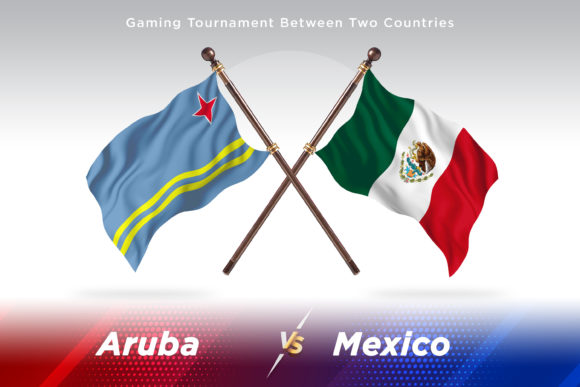
Aruba Versus Mexico: What Their Flags Reveal About Two Distinct Cultures
Flags are far more than pieces of cloth flapping in the wind. They are compact visual stories—emblems of identity, history, and collective aspiration. When you place the flag of Aruba next to the flag of Mexico, the contrast is immediate: one is a small island in the Caribbean, the other a vast continental nation. Yet both flags carry deep layers of meaning that speak to who their people are, where they have come from, and what they value. Understanding Aruba versus Mexico through their flags is a surprisingly rich way to grasp the character of each place, whether you are planning a trip, studying culture, or simply curious about the world.
This article explores the design, symbolism, history, and cultural significance of both flags. We will look at what makes each one unique, clear up common misconceptions, and show how these national symbols connect to modern life, travel, business, and education. By the end, you will see these two banners not just as colorful designs but as meaningful windows into two vibrant societies.
The Mexican Flag: A Banner of Struggle, Unity, and Heritage
The flag of Mexico is one of the most recognizable in the world. Its three vertical stripes—green, white, and red—are bold and simple. But the real centerpiece is the coat of arms in the middle white stripe: a golden eagle perched on a prickly pear cactus, devouring a snake. This image is not arbitrary. It comes directly from an ancient Aztec legend about the founding of Tenochtitlan, the capital of the Aztec Empire, which later became Mexico City.
The Meaning Behind the Colors
Each color on the Mexican flag carries historical and symbolic weight:
- Green originally represented independence from Spain. Today it also symbolizes hope and the fertility of the land.
- White stands for the purity of the Catholic faith and the unity of the Mexican people.
- Red honors the blood of national heroes who fought for independence and sovereignty.
These meanings were formalized in the 1960s, but the flag itself dates back to the early 19th century during the Mexican War of Independence. The current design was officially adopted on September 16, 1968, but the core elements have been in use for over 200 years.
The Coat of Arms: More Than a Decorative Detail
The eagle, cactus, and snake are not just a dramatic image. They tell the story of the Mexica (Aztec) people who, according to legend, wandered for years looking for a sign from their god Huitzilopochtli. The sign was an eagle on a cactus eating a snake. When they finally saw it on a small island in Lake Texcoco, they built their city there. That city became Tenochtitlan, the heart of the Aztec empire and later the foundation of modern Mexico City.
This emblem appears on Mexican coins, official documents, and of course the national flag. It is a powerful reminder that Mexico's identity is built on a deep indigenous heritage, even as the country embraces its colonial and modern history.
Common Misunderstandings About the Mexican Flag
One frequent misconception is that the green, white, and red stripes represent the colors of a particular political party or movement. In truth, they evolved from the flag of the Army of the Three Guarantees during the independence struggle. Another misunderstanding is that the eagle is always shown eating a snake. While that is the standard design, some early versions of the flag showed the eagle without a snake. The current version, standardized in 1968, always includes it. The flag is also often confused with the flag of Italy, which has similar vertical stripes but uses different shades of green and red and lacks the coat of arms.
The Aruban Flag: A Symbol of Island Pride, Nature, and Independence
The flag of Aruba is strikingly different. It features a light blue background (often described as "Larkspur blue") with two narrow horizontal yellow stripes near the bottom, and a four-pointed red star with a white border in the upper left corner. It was officially adopted on March 18, 1976, as Aruba gained greater autonomy within the Kingdom of the Netherlands. That date is now celebrated as the National Day of Aruba, or "Flag Day."
Breaking Down the Design Elements
Every element of the Aruban flag was chosen with care:
- The light blue field represents the sky, the sea, and the peaceful Aruban horizon. It also symbolizes hope and the island's bright future.
- The two yellow stripes stand for two things: the flow of tourists and the flow of industry. The lower stripe represents the island's natural resources, including gold and oil. The upper stripe represents the sun, the warmth of the people, and the prosperity brought by tourism and trade.
- The four-pointed red star has multiple layers of meaning. Each point represents one of the four cardinal directions, symbolizing that Arubans come from many parts of the world. The star also stands for the four main languages spoken on the island: Papiamento, Dutch, Spanish, and English. The red color signifies love, courage, and the blood of Arubans who fought for their island. The white border around the star represents the white sand beaches and the purity of the island's spirit.
The Historical Context of the Aruban Flag
Aruba was part of the Netherlands Antilles until 1986, when it became a separate country within the Kingdom of the Netherlands. The flag was designed by a committee led by local citizens, including the well-known Aruban historian and artist, Mr. Betico Croes. The goal was to create a flag that reflected Aruba's unique identity, separate from the other islands of the former Netherlands Antilles. The result is a flag that feels modern, optimistic, and deeply rooted in the island's natural environment and multicultural population.
Common Misunderstandings About the Aruban Flag
Some visitors to Aruba mistakenly think the flag's star is a reference to the island's location in the Southern Cross constellation. While the star's four points do suggest a compass, it is not a direct astronomical reference. Another confusion is that the yellow stripes represent only tourism. In fact, they also represent other economic sectors, including oil refining and aloe farming. The flag is sometimes called the "Flag of the Friendly Island," a nickname that reflects Aruba's welcoming culture, but that is an informal title, not an official one.
Aruba Versus Mexico: A Side-by-Side Comparison
Now that we understand each flag individually, let us compare them directly. The differences are illuminating and reveal a great deal about the two nations.
Historical Depth Versus Modern Autonomy
The Mexican flag is rooted in centuries of history, from the Aztec legend to the colonial era and the independence wars. It carries the weight of a large, complex nation with a long and often turbulent past. The Aruban flag, by contrast, is a relatively modern creation, born out of the island's move toward self-determination in the 1970s. It looks forward more than it looks back, celebrating the island's natural beauty and its role as a bridge between cultures.
Complexity Versus Simplicity
Mexico's flag is visually complex, with a detailed coat of arms that requires close inspection. Aruba's flag is simpler and more graphic, designed to be easily recognizable from a distance. This difference mirrors the nations themselves: Mexico is a vast, diverse country with deep regional traditions, while Aruba is a small island where life is more intimate and the culture is more homogeneous.
Color Symbolism
Both flags use color symbolically, but in different ways. Mexico's green, white, and red are tied to political and religious values (independence, faith, unity, sacrifice). Aruba's blue, yellow, red, and white are tied to geography (sky, sea, sand, sun) and social values (warmth, courage, diversity). The Mexican flag feels more ideological; the Aruban flag feels more environmental and multicultural.
The Role of the Star Versus the Eagle
The eagle on the Mexican flag is a specific historical symbol with roots in indigenous mythology. It is a powerful emblem of national origin. The star on the Aruban flag is a more abstract symbol of guidance, unity, and language diversity. The eagle tells a story of foundation; the star tells a story of connection and openness.
Practical Relevance: Why Flags Matter in Travel, Business, and Education
Understanding the differences between the Aruban and Mexican flags is not just an academic exercise. It has real-world applications:
For Travelers
When you visit Aruba or Mexico, knowing the symbolism of the flag shows respect for local culture. In Mexico, the flag is treated with great reverence. Flying it upside down or using it in disrespectful ways is illegal. In Aruba, Flag Day (March 18) is a major celebration, and you will see the flag everywhere—on cars, homes, and clothing. Understanding the flag's meaning will deepen your appreciation for the island's identity.
For Businesses and Marketers
If you are doing business in either country, using flag imagery appropriately can build trust. In Mexico, using the coat of arms in commercial contexts requires care because it is a national symbol. In Aruba, the flag is often used in tourism branding, but it should always be portrayed accurately. Misusing either flag can be seen as disrespectful or ignorant.
For Educators and Students
Teaching about flags is a powerful way to introduce history, geography, civics, and cultural studies. Comparing Aruba and Mexico through their flags helps students understand the difference between a continental nation with a deep indigenous heritage and a small island nation with a colonial past and a modern multicultural identity. It also shows how flags can be both traditional (Mexico) and contemporary (Aruba).
Expanding Your Understanding: Flags as Living Symbols
Flags are not static. They evolve as nations change. Mexico's flag has undergone several modifications since the 19th century, with the coat of arms being updated multiple times. Aruban flags from the 1970s are still relatively rare, but as the island's identity continues to develop, the flag remains a constant source of pride. Both flags are used in diaspora communities: you will see the Mexican flag in cities across the United States, and the Aruban flag flies proudly in Dutch cities like Amsterdam and Rotterdam, where many Arubans live and study.
In both cases, the flag acts as a rallying point for national pride, especially during sporting events like the FIFA World Cup or the Olympics. For Mexicans, the flag is a symbol of a large, diverse nation that has overcome enormous challenges. For Arubans, the flag is a symbol of a small island that has carved out its own unique place in the world.
Conclusion: Two Flags, Two Stories, One Shared Humanity
Aruba versus Mexico is not a competition. It is a comparison that helps us see how different histories, geographies, and cultures produce different symbols of identity. The Mexican flag tells a story of ancient empires, colonial struggle, and national unity. The Aruban flag tells a story of island life, multiculturalism, and peaceful self-determination. Both are beautiful in their own right, and both deserve to be understood, respected, and celebrated.
The next time you see the green, white, and red of Mexico or the blue, yellow, and red of Aruba, you will know that you are looking at more than just a flag. You are looking at a people's story—one that is woven into every stripe, every star, and every shade of color.