Austria Versus Greece: Two Flags, Two Nations, One Fascinating Comparison
Flags are far more than colorful pieces of fabric. They are visual identities, whispered histories, and bold declarations of national character. When you compare Austria versus Greece two flags, you are not just looking at red, white, and blue—you are peering into two distinct European souls. One flag speaks of blood, light, and imperial endurance. The other speaks of sea, sky, and the birth of democracy. This article will unpack everything you need to know about these two iconic banners, from their design and symbolism to their historical roots and modern meaning.
The Flags at a Glance: What Do They Look Like?
Before diving into symbolism, let us establish exactly what each flag contains.
The Flag of Austria
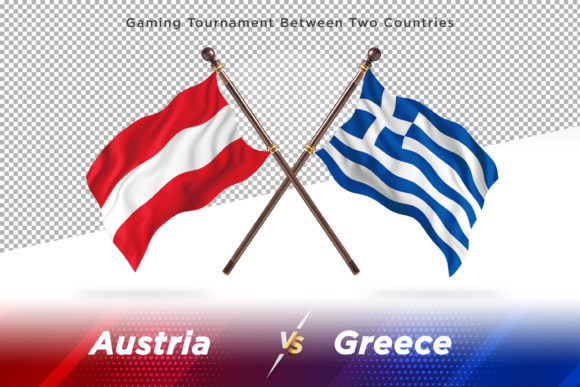
The national flag of Austria features three horizontal stripes of equal width. From top to bottom: red, white, red. It is one of the oldest national flag designs in the world, with roots tracing back to the Middle Ages. There is also a state version that includes the Austrian coat of arms, but the simple triband is the civil flag used most often.
The Flag of Greece
The national flag of Greece consists of nine alternating horizontal stripes of blue and white, with a white cross on a blue square in the upper hoist corner (the canton). The nine stripes are often said to represent the syllables of the phrase "Ελευθερία ή Θάνατος" (Freedom or Death), though other interpretations exist.
At first glance, the Austria versus Greece two flags comparison seems straightforward: Austria uses a simple red-white-red pattern, while Greece uses a more complex arrangement of blue and white stripes with a cross. But the real story lies in what those colors and shapes mean.
History and Origins: Where Did These Flags Come From?
Every flag has a creation story. Some are ancient legends, others are modern compromises. Both Austria and Greece have flags steeped in deep historical currents.
The Legend of the Austrian Flag
According to tradition, the Austrian flag dates back to the Siege of Acre during the Third Crusade (1189–1192). Duke Leopold V of Austria fought fiercely, and after the battle, his white surcoat was completely drenched in blood—except for the area where his belt had been. The resulting red-white-red pattern became his banner. Whether literally true or not, the story captures the martial spirit and endurance associated with Austria. The flag was officially adopted as the national flag in 1918, after the fall of the Austro-Hungarian Empire, though its design had been used for centuries before that.
The Journey of the Greek Flag
The Greek flag has a more recent but equally powerful origin. During the Greek War of Independence (1821–1832), various revolutionary flags appeared across the country. The current design was officially adopted by the First National Assembly in 1822, though it underwent minor modifications until 1978, when it became the sole national flag. The nine stripes are widely interpreted as representing the nine syllables of the revolutionary motto "Freedom or Death," or sometimes the nine Muses of ancient Greek mythology. The blue and white colors symbolize the sky and sea of Greece, as well as the purity of the struggle for independence.
When you examine Austria versus Greece two flags through a historical lens, you see that Austria's flag is rooted in medieval legend and imperial continuity, while Greece's flag is a product of 19th-century nation-building and revolutionary identity.
Symbolism and Meaning: What Do the Colors Represent?
Flags are visual poetry. Every stripe and shade carries weight.
Red and White in Austria
- Red: Traditionally represents the blood shed in the struggle for freedom and independence. Some interpretations also link red to strength, courage, and the imperial power of the House of Babenberg and later the Habsburgs.
- White: Symbolizes peace, truth, and the Danube River. In the Leopold legend, white stands for the belt that remained unstained—a mark of honor and purity amidst conflict.
The simplicity of the Austrian triband is itself a statement. It communicates stability, order, and a no-nonsense national identity. Austria is a country that lets its history do the talking.
Blue and White in Greece
- Blue: Represents the Aegean Sea and the Ionian Sea, the sky over Greece, and the country's maritime heritage. Different shades of blue have been used over time, but the current official tone is a deep royal blue.
- White: Symbolizes the purity of the struggle for independence, the waves of the sea, and the whitewashed buildings of the Greek islands. White also connects to the Orthodox Christian faith through the cross.
- The Cross: Explicitly represents Greek Orthodoxy, which has been central to Greek national identity for centuries.
The Greek flag is more visually complex, which mirrors Greece's layered identity—ancient and modern, religious and revolutionary, European and Mediterranean.
Practical and Everyday Relevance: Where Do You See These Flags?
Flags are not just for government buildings or Olympic ceremonies. They appear in daily life, travel, business, and digital spaces. Understanding what they represent can enrich your experience in both countries.
Austria's Flag in Modern Life
You will see the red-white-red banner everywhere in Austria: on town halls, sports merchandise, food packaging, and even on the stylish uniforms of the famous Vienna Philharmonic orchestra's summer concert series. The flag is a quiet but constant presence. It appears prominently during National Day (October 26) and during soccer matches when the Austrian national team plays. The flag's simplicity makes it highly recognizable and easy to reproduce, which is why you will find it on everything from postcards to Apfelstrudel boxes in airport shops.
Greece's Flag in Modern Life
Greece's blue and white flag is one of the most recognizable in the world, largely because of the country's massive tourism industry. It flies over islands, ferries, hotels, and tavernas. During Greek Independence Day (March 25), the flag is displayed everywhere, from Athens to the smallest village in Crete. You will also see it in diaspora communities around the globe—Greek restaurants, churches, and cultural centres proudly fly the flag. The flag is deeply tied to the tourist identity of Greece; it is as much a symbol of welcome and summer as it is of national pride.
In a practical sense, comparing Austria versus Greece two flags helps travelers and businesspeople quickly identify national context, cultural pride, and even local etiquette. For example, in both countries, flying a flag upside down is considered disrespectful, and the Greek flag should never touch the ground.
Common Misunderstandings and Assumptions
Because flags are so familiar, people often assume they know more than they do. Let us clear up a few common points of confusion about these two flags.
Misunderstandings About the Austrian Flag
- "It is the same as Latvia's flag." Almost, but not quite. Latvia's flag also has red-white-red stripes, but the red is a much darker shade (often called "Latvian red" or "blood red"), and the white stripe is narrower in proportion. Austrian red is brighter, and all three stripes are equal in width.
- "The flag has always been the same." Not exactly. The Austrian Empire once used a black-and-gold flag (the Habsburg colors). The modern red-white-red flag became dominant only in the 20th century, though its medieval roots are genuine.
- "The coat of arms version is the only official flag." Actually, both the plain triband and the version with the coat of arms are official, depending on the context. The plain version is the national flag and most commonly used.
Misunderstandings About the Greek Flag
- "The nine stripes are for the nine Muses." While this is a popular romantic interpretation, the most historically accepted explanation is that the nine stripes represent the syllables of "Ελευθερία ή Θάνατος." However, the Muses interpretation is not wrong—it reflects how Greeks themselves have embraced multiple layers of meaning.
- "Blue and white were always the national colors." During the Byzantine era, imperial flags often used purple and gold. The blue and white association became cemented only during the War of Independence in the 1820s.
- "The flag is purely patriotic." For many Greeks, the flag is also deeply religious because of the cross in the canton. It is not unusual to see the flag displayed inside churches or used during religious festivals alongside Orthodox icons.
Broader Understanding: What the Flags Reveal About Each Nation
Flags are mirrors of national character. The Austria versus Greece two flags comparison reveals deeper cultural traits that go beyond design.
Austria: Order, Continuity, and Subtle Strength
Austria's flag is restrained. It does not need many colors or symbols to make its point. This reflects a national culture that values precision, tradition, and quiet competence. Austria is the land of classical music, alpine order, and imperial legacy. The flag's ancient origin story—a duke's blood-stained surcoat—speaks to a nation that sees itself as enduring and honorable. The design has stayed essentially unchanged for centuries, which mirrors Austria's cultural conservatism and respect for the past.
Greece: Passion, Identity, and Expressive Heritage
Greece's flag is dynamic. The stripes create movement, and the cross anchors it with clear meaning. This reflects a national culture that is passionate, expressive, and deeply connected to both ancient glory and modern struggle. Greece is the land of philosophy, drama, and fierce independence. The flag's stripes recall a revolutionary cry, and its colors mirror the natural beauty of the Aegean. The flag is not shy about its complexity—it wears its history and faith on its sleeve.
Together, these two flags represent two poles of European identity: Central European stability and Mediterranean vitality. Both are beautiful, both are meaningful, and both tell stories that continue to unfold today.
Final Thoughts: Why Flags Matter in a Connected World
Whether you are planning a trip to Vienna or Athens, studying European history, or simply curious about national symbols, understanding Austria versus Greece two flags gives you a richer appreciation for both countries. Flags are shortcuts to cultural literacy. They help you navigate unfamiliar places with greater awareness and respect. The next time you see the red-white-red or the blue-and-white stripes, you will know not just what they look like—but what they stand for.
Flags are not static. They evolve, they inspire, and they connect people across time and distance. Austria and Greece, through their flags, invite you to explore their landscapes, their histories, and their hearts. Whether you prefer the quiet dignity of the triband or the proud complexity of the striped cross, both flags remind us that national identity is something to be celebrated, understood, and shared.