Azerbaijan Versus Bolivia: Two Flags, Two Worlds – A Complete Comparison
At first glance, the flags of Azerbaijan and Bolivia might seem to share a passing resemblance, especially to the untrained eye. Both feature horizontal tricolor layouts with bold, primary colors, and both carry deep historical and cultural weight. But dig a little deeper, and you will find two radically different stories encoded in their stripes, symbols, and shades. Whether you are a geography enthusiast, a student of vexillology, or simply someone who wants to read the visual language of nations, understanding the flags of Azerbaijan and Bolivia offers a surprising window into the soul of two distinct regions: the crossroads of Eurasia and the heart of South America.
Why Compare the Flags of Azerbaijan and Bolivia?
People often land on this comparison because both flags are horizontal tricolors with a red stripe somewhere in the design. In an age of global travel and digital connection, flags appear everywhere — from airport terminals to social media profiles — and it is easy to confuse two banners that share a similar silhouette. However, the similarities are mostly structural, not symbolic. Azerbaijan's flag speaks to Turkic heritage, Islamic tradition, and modernization, while Bolivia's flag embodies indigenous pride, natural wealth, and a revolutionary history. By placing them side by side, we can learn not only to tell them apart but also to appreciate how a country's identity is woven into fabric and color.
The Flag of Azerbaijan: A Symbol of Turkic Identity and Modernity
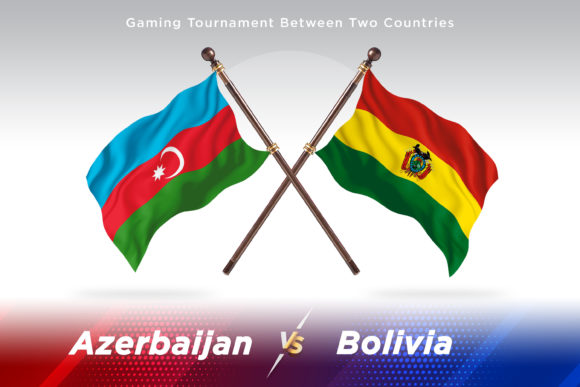
When you look at the flag of Azerbaijan, you see three horizontal stripes: blue at the top, red in the middle, and green at the bottom. In the center of the red stripe sits a white crescent moon and an eight-pointed star. The design is instantly recognizable across the Caucasus region and carries layers of meaning that reach back centuries.
What the Colors Mean
The blue stripe represents the Turkic heritage of the Azerbaijani people. Azerbaijan is a Turkic-speaking nation with deep cultural and linguistic ties to Turkey and Central Asia. The red stripe symbolizes progress, courage, and the blood of those who fought for the nation's independence. The green stripe stands for Islam, the predominant religion in the country, as well as for the vitality of the land itself. Together, these three colors were officially adopted on November 9, 1918, during the short-lived Azerbaijan Democratic Republic, making it one of the earliest modern flags in the Muslim world to incorporate secular and national symbolism alongside religious identity.
The Crescent and Star
The white crescent moon and eight-pointed star are emblematic of Turkic and Islamic identity. The crescent is a widely recognized symbol in the Muslim world, while the eight points of the star are sometimes said to represent the eight Turkic peoples of the region or the eight letters of the word "Azerbaijan" when written in Arabic script. More broadly, the star is a symbol of light, guidance, and the country's forward-looking aspirations. This combination of Turkic, Islamic, and modern elements makes the Azerbaijani flag a powerful statement of a nation that sits at the intersection of East and West.
Historical Context
The flag was used only briefly during the first independence period before Azerbaijan was absorbed into the Soviet Union. During the Soviet era, a different flag with communist symbols was used. But when Azerbaijan regained independence in 1991, the original tricolor was reinstated with minor modifications. Today, the flag flies over Baku's modern skyline, the ancient streets of Sheki, and the oil fields of the Caspian Sea. It is a unifying symbol for a country that balances tradition with rapid modernization.
The Flag of Bolivia: A Banner of Indigenous Heritage and Natural Wealth
Bolivia's flag, known as La Tricolor, consists of three horizontal stripes: red at the top, yellow in the middle, and green at the bottom. Unlike Azerbaijan's flag, there is no emblem in the center for the national flag (though a coat of arms version exists for official government use). The simplicity of the tricolor is deceptive — every color tells a story of geography, history, and identity.
What the Colors Represent
The red stripe honors the bravery of the soldiers who fought in Bolivia's wars of independence and the blood spilled in the struggle for freedom. The yellow stripe symbolizes the country's vast mineral wealth, notably gold, silver, and tin. Bolivia has been a major source of precious metals since colonial times, and yellow recalls those riches. The green stripe stands for the lush rainforests, fertile valleys, and the natural abundance of the land. Beneath these colors lies a deeper resonance: red also represents the native animals and the Andean sunset, yellow represents the coca leaf and the sun god Inti, and green represents the Amazon and the promise of a fertile future.
Official Adoption and Variations
Bolivia's flag was originally adopted on October 31, 1851, during the presidency of Manuel Isidoro Belzu. Since then, the design has remained consistent, though Bolivia also recognizes a second version: the Wiphala, a checkered multicolored square flag that represents the indigenous Andean peoples. The Wiphala was granted equal official status in 2009 under the constitution of President Evo Morales. This dual-flag system is unique and reflects Bolivia's commitment to multiculturalism and indigenous rights. For many Bolivians, especially in rural highland communities, the Wiphala is as important as the tricolor.
Historical and Cultural Weight
Bolivia's flag has flown through dramatic shifts: from republican consolidation, through the loss of its Pacific coastline in the War of the Pacific (1879–1884), to the rise of indigenous political movements in the twenty-first century. The flag is a fixture at festivals like Fiesta del Gran Poder in La Paz and during the vibrant Carnival of Oruro. It is also a symbol of national pride for Bolivians living abroad, of whom there are significant communities in Argentina, Spain, and the United States.
Side-by-Side Comparison: Similarities and Differences
Let's break down exactly where these two flags converge and diverge.
Structural Similarities
- Both are horizontal tricolors. This is the most obvious shared feature. Many national flags use this design because it is simple, balanced, and easy to reproduce.
- Both include red. In each flag, red holds a place of honor — at the top in Bolivia and in the middle in Azerbaijan. In both cases, red symbolizes courage and sacrifice.
- Both date to the mid-nineteenth to early twentieth centuries. Azerbaijan's original design is from 1918, and Bolivia's from 1851. Both flags have historical roots in independence or national awakening movements.
Critical Differences
- Color order and meaning: Azerbaijan uses blue-red-green, while Bolivia uses red-yellow-green. The meanings diverge significantly: Azerbaijan's blue points to Turkic identity, Bolivia's yellow points to mineral wealth.
- Emblems: Azerbaijan's flag features a crescent and eight-pointed star at the center. Bolivia's civil flag has no emblem at all. This is the easiest way to tell them apart — if you see a crescent and star, you are looking at Azerbaijan.
- Cultural associations: Azerbaijan's flag is rooted in Turkic and Islamic symbolism. Bolivia's flag is rooted in European republicanism, indigenous Andean symbolism, and natural resource identity.
- Additional recognized flags: Bolivia uniquely offers equal status to the Wiphala, meaning Bolivia effectively has two official flags. Azerbaijan has only one official national flag.
Common Misunderstandings and How to Avoid Them
A frequent assumption is that the eight-pointed star on Azerbaijan's flag is a religious symbol only. While it does connect to Islamic culture, it is equally a symbol of Turkic unity and linguistic identity. Another common mistake is to think Bolivia's yellow stripe represents only gold mining. In reality, yellow also symbolizes the sun, the coca leaf, and the life-giving energy of the Andes. A third misunderstanding is that these two flags are essentially interchangeable because they both have three stripes. As we have seen, the meanings, histories, and visual details are profoundly different.
Practical Relevance in Modern Life
So why does this matter? In an interconnected world, flags appear on websites, in news reports, on product labels, and in educational materials. If you work in international business, you might encounter both flags when trading with the Caucasus region or South America. Knowing the difference signals cultural competence. In education, teachers use flags to introduce geography, history, and civics. Being able to explain both flags deepens a student's understanding of global diversity. For travelers and digital nomads, recognizing a flag correctly can be a small but meaningful gesture of respect when visiting a new country. And in creative fields like graphic design or content creation, using the wrong flag can undermine trust and accuracy.
Broader Understanding: Flags as Stories
Every flag is a compressed story. Azerbaijan's flag speaks to a nation that has reinvented itself after Soviet rule, balancing faith, ethnicity, and modernity. Bolivia's flag speaks to a country that has endured colonial exploitation, war, and political change, while elevating indigenous voices. When you see these two flags side by side, you are not just looking at colors — you are looking at two different paths through the modern world. Azerbaijan looks toward the Caspian and the Turkic world; Bolivia looks toward the Andes and the Amazon. Both are proud, both are complex, and both deserve to be understood on their own terms.
Conclusion: Two Flags, Many Lessons
The comparison between Azerbaijan and Bolivia's flags is a reminder that visual similarity can be misleading. While both use horizontal tricolors and feature red, the symbolism, history, and cultural context are entirely distinct. Azerbaijan's blue-red-green with crescent and star belongs to the crossroads of Europe and Asia. Bolivia's red-yellow-green belongs to the high plains and rainforests of South America. Learning to read these differences enriches your understanding of the world and helps you engage more thoughtfully with the countless flags you encounter every day. Next time you see a tricolor banner, take a moment to ask: what story does this flag tell? The answer is almost always more fascinating than the stripes alone suggest.