Azerbaijan vs Bosnia and Herzegovina: A Tale of Two Flags and National Identities
Flags are far more than pieces of colored fabric. They are compact visual stories—encapsulating centuries of history, cultural values, political struggles, and collective aspirations. For the casual observer, the flags of Azerbaijan and Bosnia and Herzegovina might seem like distant symbols from two different parts of the world. Yet, when placed side by side, they reveal fascinating contrasts and surprising parallels that speak to each nation's unique path.
Whether you are a traveler, a student of geopolitics, or simply someone curious about world cultures, understanding what these flags represent offers a richer perspective on the countries themselves. This article explores the design, history, symbolism, and broader significance of the Azerbaijani and Bosnian flags, showing how these national emblems embody the soul of their people.
Why Compare Azerbaijan and Bosnia?
At first glance, Azerbaijan—a Caucasus nation at the crossroads of Eastern Europe and Western Asia—and Bosnia and Herzegovina—a Balkan country in Southeast Europe—might appear to have little in common. One is predominantly Shia Muslim with Turkic roots; the other is a multi-ethnic state with Bosniak, Croat, and Serb communities. Yet both nations share a history of being part of larger empires, a struggle for sovereignty in the 1990s, and a deep desire to define their modern identities. Their flags are windows into these journeys.
Design and Colors
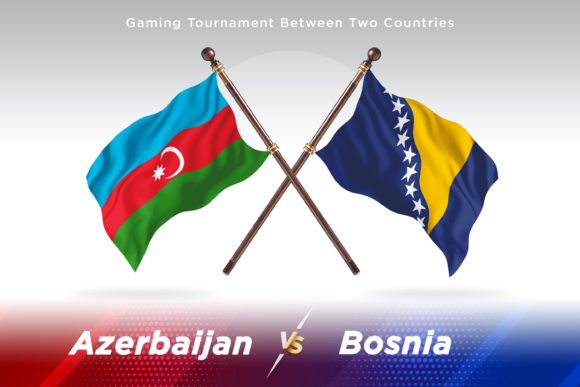
The national flag of Azerbaijan consists of three equal horizontal stripes: blue on top, red in the middle, and green at the bottom. At the center of the red stripe, a white crescent moon and an eight-pointed star appear. This design was officially adopted on February 5, 1991, though its origins trace back nearly a century earlier.
What the Colors and Symbols Mean
- Blue represents the Turkic heritage of the Azerbaijani people, linking them to a broader cultural and linguistic family across Central Asia.
- Red symbolizes progress, modernization, and the blood shed by those who fought for the nation's independence.
- Green reflects the Islamic faith, which has shaped Azerbaijani culture and identity for over a millennium.
- The crescent moon is a classic symbol of Islam, but in the Azerbaijani context, it also evokes the idea of a bright future and national rebirth.
- The eight-pointed star is a distinctive feature. It is often interpreted as representing the eight Turkic peoples or the eight branches of the Turkic language family, though some scholars also connect it to the eight letters in the word "Azerbaijan" when written in the Arabic script.
A Brief History of the Azerbaijani Flag
The flag's design dates back to the Azerbaijan Democratic Republic, which existed from 1918 to 1920—one of the first secular democratic republics in the Muslim world. When the Soviet Union annexed Azerbaijan, this flag was banned. During the Soviet era, Azerbaijan used a modified red banner with a hammer, sickle, and a blue stripe at the bottom. The original tricolor was restored as the national flag in 1991, when Azerbaijan regained independence. For the Azerbaijani people, this flag is a powerful emblem of national pride, resilience, and the reclamation of their historical identity.
Design and Colors
The flag of Bosnia and Herzegovina features a blue field with a yellow right triangle that cuts across the flag from the top edge to the fly side. Along the hypotenuse of the triangle runs a line of seven full white five-pointed stars and two half-stars at the top and bottom. The stars extend from the triangle toward the top and bottom edges of the flag. This design was adopted on February 4, 1998.
What the Colors and Symbols Mean
- Blue is reminiscent of the flag of Europe, signaling Bosnia's aspirations toward European integration and its place within the broader European community.
- The yellow triangle represents the three constituent peoples of Bosnia and Herzegovina: Bosniaks, Croats, and Serbs. The shape also evokes the outline of the country's geography, often said to resemble a triangle or a heart.
- The white stars symbolize peace, unity, and the hope for a harmonious future. The fact that the stars are infinite in number (implied by the half-stars at the edges) suggests the continuity and eternal nature of peace and sovereignty. The stars also echo the European Union's flag, reinforcing the European orientation of the country.
A Brief History of the Bosnian Flag
The flag of Bosnia and Herzegovina is a relatively young design. During the Bosnian War (1992–1995), various factions used different symbols, often reflecting ethnic divisions. After the Dayton Peace Agreement ended the conflict, the country needed a neutral, unifying emblem that did not favor any one group. The current flag was selected by the United Nations High Representative as a compromise—a flag that represents the state as a whole rather than any particular ethnicity. This makes it unique: a flag that was consciously designed to foster unity in a deeply divided society.
Visual Differences
On the surface, the two flags are quite distinct. Azerbaijan uses a classic tricolor layout with a crescent and star, while Bosnia employs a modern, geometric design with a triangle and stars. The Azerbaijani flag is rich in traditional Islamic and Turkic iconography; the Bosnian flag leans toward European symbolism and abstract representation.
Shared Themes
Despite their visual differences, both flags share deeper commonalities:
- Struggle for independence: Both nations emerged from the collapse of larger empires (the Soviet Union for Azerbaijan; Yugoslavia for Bosnia) and had to fight for their sovereignty.
- Identity negotiation: Each flag reflects the challenge of balancing multiple identities—ethnic, religious, geographic, and political.
- Use of celestial symbols: The crescent and stars appear in both flags, albeit in different forms. In Azerbaijan, the crescent is a classic Islamic sign; in Bosnia, the stars evoke European unity and peace.
- Color symbolism: Blue appears in both flags. For Azerbaijan, it represents Turkic heritage; for Bosnia, it signals European belonging. Green in Azerbaijan represents Islam, while Bosnia uses green less prominently (though green is present in the coat of arms used by some entities within the country).
Key Differences
| Aspect | Azerbaijan | Bosnia and Herzegovina |
|---|---|---|
| Adoption Year | 1991 (original 1918) | 1998 |
| Design Style | Horizontal tricolor with emblem | Geometric field with triangle and stars |
| Primary Symbol | Crescent and eight-pointed star | Yellow triangle and white stars |
| Religious Emphasis | Islamic heritage (crescent, green) | Secular, multi-ethnic (no religious symbol) |
| Origin Context | Post-independence from USSR | Post-war reconciliation |
Practical Relevance: Why Flags Matter Today
Flags are not just artifacts of history; they play a living role in modern life. For Azerbaijan, the tricolor is flown at diplomatic events, sporting competitions, and cultural festivals worldwide. It represents the country's growing role as an energy hub and its blend of Eastern and Western influences. For Bosnia and Herzegovina, the flag is a daily reminder of the fragile peace and the ongoing effort to build a shared national identity among diverse communities.
Understanding these flags can enhance your travel experiences, business interactions, or even casual conversations. If you visit Baku, the Azerbaijani capital, you'll see the flag everywhere—from the iconic Flame Towers to the National Flag Square, which once flew the world's tallest flagpole. In Sarajevo, the Bosnian flag drapes government buildings and appears alongside the flags of the entities (Federation of Bosnia and Herzegovina and Republika Srpska), offering a visual lesson in the country's complex governance.
Common Misunderstandings Clarified
One common assumption is that the Azerbaijani flag's eight-pointed star is purely Islamic. While it does have Islamic connotations, its primary meaning is tied to Turkic heritage and the word "Azerbaijan." Another misconception is that the Bosnian flag is widely embraced by all citizens. In reality, the flag is a compromise; some ethnic groups feel more connection to their own regional or historical symbols. The flag's role as a neutral state symbol is both its strength and its challenge.
People also sometimes confuse the Azerbaijani flag with the flag of Turkey due to the crescent and star motif. However, Azerbaijan's blue and green stripes make it distinct, and the eight-pointed star is unique. Similarly, the Bosnian flag is occasionally mistaken for a European Union flag variation, but the yellow triangle and the arrangement of stars set it apart.
Broader Context: Flags as Identity Mirrors
Comparing these two flags reveals something profound about nation-building. Azerbaijan's flag draws from deep historical and religious roots, asserting a continuous identity that predates the Soviet era. Bosnia's flag, by contrast, was consciously created to transcend ethnic divisions and project a forward-looking, European-oriented identity. Both approaches are valid responses to each country's unique circumstances.
In a world where national boundaries are increasingly questioned and global identity is on the rise, flags remain powerful anchors. They remind us that nations are not just administrative units but emotional communities bound by shared stories. The flags of Azerbaijan and Bosnia and Herzegovina are two such stories—different in color and shape, but equally rich in meaning.
Conclusion: More Than Meets the Eye
The next time you see the blue, red, and green of Azerbaijan or the blue, yellow, and white of Bosnia and Herzegovina, you'll know there's more to them than meets the eye. These flags are not just symbols of countries; they are symbols of ideas—independence, unity, faith, hope, and the ongoing human effort to belong. Whether you're studying geopolitics, planning a trip, or simply expanding your cultural literacy, understanding these emblems deepens your appreciation of the world's diversity.
Flags are the mirrors of nations. In the case of Azerbaijan and Bosnia and Herzegovina, those mirrors reflect landscapes of struggle, pride, and aspiration—and they invite us to look closer.
Have you ever encountered a flag that surprised you with its story? Share your thoughts or questions below—we'd love to hear how flags have shaped your understanding of a country.