Armenia Versus Jordan: Two Flags
A flag is a country’s quickest visual pitch, compressing identity, history, and ambition into a single design. The flags of Armenia and Jordan accomplish this with remarkable efficiency, yet they speak in entirely different visual languages. Understanding the differences between them isn’t just an academic exercise for vexillology enthusiasts. For marketers, educators, designers, and entrepreneurs working across global markets, mastering these distinctions builds cultural competence and practical accuracy. Let’s examine what makes each flag distinct and why the comparison matters in real-world applications.
Why Compare the Flags of Armenia and Jordan?
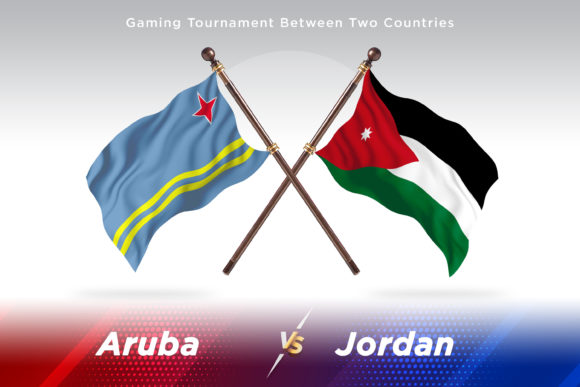
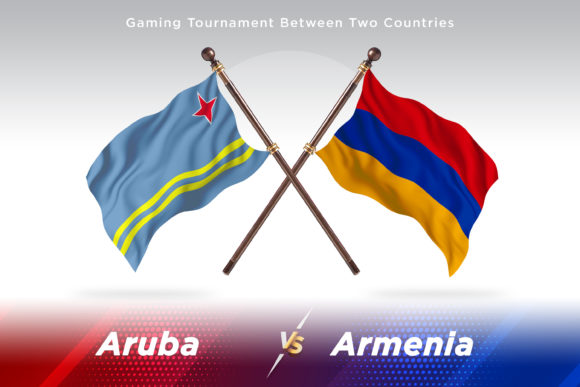
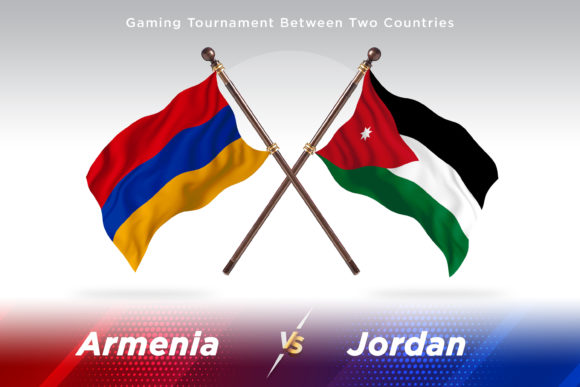
At first glance, both flags feature horizontal bands and bold colors, but their design philosophies diverge sharply. Armenia uses a clean tricolor of red, blue, and orange. Jordan uses black, white, and green horizontal stripes overlaid with a red chevron and a seven-pointed star. Grouping them as simply “West Asian flags” misses the nuanced stories embedded in their patterns.
For professionals, this comparison serves a practical purpose. If you are building a multicultural brand, designing an educational app, or planning a region-specific marketing campaign, using the wrong color proportions or omitting the star on Jordan’s flag can erode trust. Knowing the rationale behind each design helps you apply them correctly and respectfully.
The Armenian Tricolor: Abstraction and Resilience
Adopted in 1990 after the fall of the Soviet Union, Armenia’s flag echoes the short-lived First Republic of Armenia from 1918. It is a classic horizontal tricolor with three equal stripes:
- Red represents the Armenian Highlands, the ongoing struggle for survival, and the blood spilled defending the nation.
- Blue symbolizes the will of the Armenian people to live under peaceful skies and is deeply associated with Mount Ararat, the national symbol visible from much of the country.
- Orange (often described as apricot-colored) represents the creative talent, hard work, and resilience of the Armenian diaspora and homeland.
The choice of orange is distinctive. Among the world’s tricolors, Armenia stands apart by using a warm, earthy tone rather than the more common gold or yellow. This gives the flag a unique warmth and prevents it from blending into the broader family of red-blue-white Slavic or European flags. For a graphic designer, this palette is a strong starting point for campaigns requiring a sense of ancient roots mixed with modern energy.
The Jordanian Chevron: History and Dynasty
Jordan’s flag, formally adopted in 1928 and based on the flag of the Great Arab Revolt, is deliberately layered with political and historical meaning. The design immediately communicates its place within the broader Arab world:
- Black stripes represent the Abbasid Caliphate.
- White stripes represent the Umayyad Caliphate.
- Green stripes represent the Fatimid Caliphate.
- Red chevron represents the Hashemite dynasty, which led the Arab Revolt and currently rules Jordan. The chevron itself is a powerful directional element, pointing toward the hoist of the flag.
- The seven-pointed star embedded in the chevron symbolizes the seven verses of the first surah of the Quran, Al-Fatiha, and signifies unity and faith.
For an educator, the Jordanian flag is a visual timeline of Islamic dynasties. For a marketer, the star and chevron are instantly recognizable elements that differentiate Jordan from other flags using Pan-Arab colors, such as Palestine, Kuwait, or Sudan. This distinct geometry makes the flag highly memorable in digital interfaces where space is limited.
Marketing, Branding, and Cultural Engagement
Imagine a travel company launching a campaign for “Ancient Kingdoms and Modern Wonders,” featuring both Armenia and Jordan. Using the flags correctly signals that your company respects your audience.
- For Armenia: Leverage the vibrant orange and blue in your promotional materials. The orange suggests creativity and natural richness (think apricots, cognac, and autumn landscapes). Avoid over-saturating the red to the point where it resembles Poland or Indonesia. The specific balance of the three colors matters.
- For Jordan: The flag’s darker tones (black, deep green, and red) lend themselves well to campaigns emphasizing heritage, stability, and adventure. The star is non-negotiable. Using a generic red chevron without the star is inaccurate and would likely be noticed by Jordanian audiences.
An entrepreneur launching a subscription box featuring goods from these regions can use the flags as visual anchors on landing pages. Pairing the flag with proper typography and regional imagery creates an immediate sense of place and authenticity.
Education and Academic Credibility
A high school geography teacher or a university lecturer covering West Asian politics will frequently use flags as visual aids. The moment you project a flag incorrectly, your credibility takes a hit. Here is how this comparison specifically helps in education:
- Political Science: Use the flags to compare governance models. Armenia is a parliamentary democracy with a tricolor that echoes revolutionary French ideals. Jordan is a constitutional monarchy with a flag explicitly rooted in dynastic and religious symbolism. This contrast illustrates how national symbols reflect political structures.
- History: The Armenian flag connects to the post-Soviet independence movements of the early 1990s. The Jordanian flag connects to the post-Ottoman Arab Revolt of 1916. A side-by-side visual helps students immediately grasp two different historical trajectories emerging from the collapse of two different empires.
For online course creators, including a short segment on “Reading Flags” adds depth to lessons on international relations and cultural studies. It also helps learners retain information by associating concepts with strong visual cues.
Digital Product Design and User Experience
For UX designers and product managers, flag accuracy is a fundamental part of localization. If your app includes a country selector or region-specific settings, the visual rendering of flags must be flawless at every size.
- Armenia at small sizes: The three horizontal stripes (1:2 ratio) render well even at 16px. The key risk is color bleeding; ensure the orange stripe stays distinct from the red and does not become yellow due to poor compression.
- Jordan at small sizes: The chevron and star are high-risk elements. At 16px, the seven-pointed star can become a blurry dot. If you are working on a mobile app, consider using the flag in a 24x24px minimum size to preserve the star’s sharpness. Alternatively, use the flag with its country code (JO) to ensure clarity.
For web publishers, always use official SVG files rather than raster images. Raster files often show jagged edges and incorrect colors when scaled. Sourcing from official government repositories or trusted vector databases eliminates guesswork.
Strengths and Weaknesses in Practical Use
Every flag has strengths and limitations depending on the medium and context. Here is an honest assessment of how these two flags perform in real-world scenarios:
Armenia’s Strengths: The warm and relatively unique color palette (red, blue, orange) stands out on a shelf, in a digital feed, or on a physical banner. It is difficult to confuse with other major tricolors. The design is incredibly simple to reproduce across any medium, from embroidery to digital screens.
Armenia’s Considerations: The flag’s similarity to other horizontal tricolors (like Russia or Serbia) is low, but the orange stripe must remain a distinct apricot tone. If printing physically, work with a professional printer who can match the specific orange without letting it slip into gold or yellow.
Jordan’s Strengths: The red chevron is a powerful dynamic element that immediately catches the eye. Among the many horizontal tricolors of the Middle East, the chevron makes the Jordanian flag instantly recognizable. The star adds a layer of meaning that rewards closer inspection.
Jordan’s Considerations: Complexity is the trade-off. The star can be difficult to render cleanly at small sizes or on low-resolution materials. For embroidered patches or promotional pins, ensure the star is large enough to be distinct. Additionally, be aware of its similarity to the flags of Palestine and Kuwait; the star and chevron position are the primary differentiators.
A Closer Look at Color and Composition
For entrepreneurs and creators managing their own branding, here are the standard color references for accurate reproduction:
Armenia:
- Red: #D90012 (sRGB) / Pantone 186 C
- Blue: #0033A0 (sRGB) / Pantone 287 C
- Orange: #F2A800 (sRGB) / Pantone 1235 C
- Proportion: 1:2
Jordan:
- Black: #000000 (sRGB) / Process Black C
- White: #FFFFFF (sRGB) / White
- Green: #007A3D (sRGB) / Pantone 355 C
- Red: #CE1126 (sRGB) / Pantone 186 C
- Proportion: 1:2
Both flags share the same aspect ratio, which simplifies side-by-side layouts. If you are building a comparison chart, infographic, or slide deck, the consistent ratio makes alignment clean and professional.
Practical Recommendations for Accurate Implementation
Whether you are a publisher, a small business owner, or a content creator, these guidelines will help you handle both flags correctly:
- Always source official vector files. Avoid downloading flag images from generic image searches. Use government websites or reputable vexillology databases. They provide the exact SVG files with verified proportions and colors.
- Test rendering at target sizes. Before launching a website or app, check how each flag renders at 16px, 32px, and 64px. If the Jordanian star becomes a blob, increase the minimum size or add a text label.
- Respect the design integrity. Do not stretch, skew, or crop the flag elements. Do not replace the orange stripe with yellow for Armenia. Do not remove the star for Jordan. These elements are non-negotiable for accurate representation.
- Provide context with text. In user interfaces, always pair flag icons with the country name (e.g., “Armenia” or “Jordan”). This follows accessibility best practices and ensures clarity for all users.
- Consider cultural sensitivity. Flags are not decorative clip art. They represent national sovereignty and collective memory. Use them in contexts that align with professional respect and accuracy.
Understanding the differences between the Armenian and Jordanian flags is a small investment with a large return. It sharpens your visual literacy, protects your credibility, and demonstrates genuine respect for the audiences you serve. Whether you are designing a global platform, teaching a classroom, or launching a brand campaign, knowing exactly what these symbols mean—and how to use them correctly—elevates your work from generic to thoughtful.