Armenia Versus Uzbekistan Two Flags: A Detailed Comparative Study of Design, Symbolism, and National Identity
Flags are far more than colorful pieces of fabric fluttering in the wind. They are distilled expressions of a nation's history, struggles, aspirations, and cultural DNA. When you place Armenia Versus Uzbekistan Two Flags side by side, you are not just comparing two designs—you are engaging with two distinct narratives that span millennia, from ancient kingdoms to Soviet domination and finally to independent statehood. Both flags are rich in symbolism, yet they communicate very different stories through their choice of colors, patterns, and emblems.
This article offers a thorough, side-by-side examination of the Armenian and Uzbek flags. We will explore their historical origins, decode their symbolic meanings, discuss practical use cases in diplomacy and branding, and consider what each flag reveals about its nation's worldview. Whether you are a researcher, educator, business owner with international interests, or simply a curious reader, this comparison will deepen your understanding of two remarkable national symbols.
Historical Backdrop: Two Paths to Independence
Understanding the flags of Armenia and Uzbekistan requires a glance at their respective journeys to sovereignty. Both nations were absorbed into the Soviet Union, but their pre-Soviet histories and post-Soviet trajectories differ markedly.
Armenia's Flag: Rooted in Ancient Kingdoms and a Hard-Won Republic
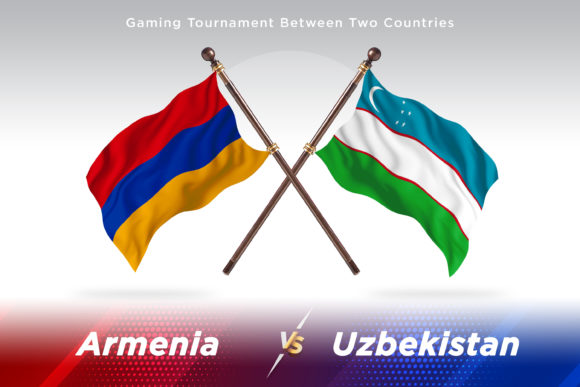
Armenia's modern tricolor was officially adopted on August 24, 1990, shortly before the collapse of the Soviet Union. However, its origins trace back to the short-lived First Republic of Armenia (1918–1920). The flag was designed by Stepan Malkhasyants, a prominent philologist and historian, who chose three horizontal bands of red, blue, and orange (often described as apricot). The colors recall the medieval Armenian dynasties and the nation's Christian heritage. After 70 years of Soviet rule, the re-adoption of this tricolor was a powerful act of reclamation, signaling a return to pre-Soviet identity and a rejection of communist symbolism.
Uzbekistan's Flag: A Post-Soviet Renaissance with Timurid Echoes
Uzbekistan's flag was adopted on November 18, 1991, shortly after the country declared independence from the Soviet Union. It was selected through a national competition, with the winning design submitted by Farhod Jalalov. The flag features three horizontal stripes of blue, white, and green, separated by thin red lines. In the top left corner, a white crescent moon and twelve white stars are arranged in a distinctive pattern. The design deliberately references the flag of the Timurid Empire, evoking the region's glorious past under Amir Timur (Tamerlane), while also incorporating modern elements of peace, nature, and national unity.
When examining Armenia Versus Uzbekistan Two Flags through a historical lens, one sees a contrast between Armenia's reclamation of a pre-Soviet republican identity and Uzbekistan's deliberate construction of a new post-Soviet identity rooted in imperial glory and natural abundance.
Decoding the Symbolism: Colors and Elements
Both flags use color symbolically, but their palettes and the meanings attached to them are wholly distinct. Let us break down each element.
Armenia's Tricolor: Red, Blue, and Apricot
- Red – Represents the blood shed by Armenian soldiers and civilians in defense of their homeland. It also symbolizes the Armenian Highlands, the lifeblood of the nation, and the courage of the people. In a more spiritual sense, red recalls the color of the altar cloths in Armenian Apostolic churches.
- Blue – Symbolizes the sky over Armenia and the nation's aspiration for peace and freedom. It also represents the Lake Sevan, one of the largest high-altitude freshwater lakes in the world, and the unimpeded will of the Armenian people to live in harmony.
- Orange (Apricot) – This distinctive hue is arguably the most unique aspect of the Armenian flag. It represents the creative talent, hard work, and resilience of the Armenian people. Apricot is also a national fruit, deeply tied to Armenian agriculture and cuisine. The color is sometimes interpreted as a symbol of the harvest and the golden future Armenians strive to build.
The combination is striking and instantly recognizable. The lack of any emblem, star, or crescent makes Armenia's flag a pure tricolor, relying entirely on the emotional weight of its colors. This simplicity lends itself to easy reproduction and powerful visibility at a distance.
Uzbekistan's Multilayered Design: Blue, White, Green, Red, Crescent, and Stars
- Blue – The dominant stripe symbolizes the sky, water, and the Turkic heritage of the Uzbek people. It is also a tribute to the flag of the Timurid Empire, connecting modern Uzbekistan to its medieval heyday. Blue is a sacred color in Turkic cosmology, representing eternity and the heavens.
- White – Stands for peace, purity, and the light of knowledge. It also represents the cotton industry, a major pillar of Uzbekistan's economy. Cotton is often called "white gold" in the region.
- Green – Symbolizes nature, fertility, and the Islamic faith of the majority of Uzbeks. Green is a traditional color of Islam and also represents the renewal of life in the arid landscape.
- Red Fimbriations – The thin red lines separating the main stripes represent the life force and the energy of the nation. They act as a unifying element, binding the three broader stripes together.
- Crescent Moon – A powerful symbol of Islam, the crescent also represents the rebirth of the nation and the hope for a bright future. It is placed in the top left corner, the position of honor.
- Twelve Stars – The twelve stars arranged in a pattern (three rows of three, plus three more above) have multiple interpretations. They represent the twelve months of the year, the twelve signs of the zodiac, and, most importantly, the twelve regions (viloyatlar) of Uzbekistan. They also signify the pursuit of perfection and the guiding light of knowledge.
The Uzbek flag is denser with symbols than the Armenian one. Every element carries a deliberate message, making the flag a kind of visual constitution. This complexity is a strength in educational and ceremonial contexts, though it can be more challenging to reproduce accurately at very small scales.
Comparative Aesthetics: Visual Impact and Design Philosophy
When evaluating Armenia Versus Uzbekistan Two Flags from a pure design standpoint, one sees two very different philosophies at work.
Armenia's flag is a study in restraint. The three horizontal bands are equal in width, creating a balanced, harmonious composition. There is no emblem or charge, so the entire communicative burden falls on the colors themselves. This makes the flag highly adaptable—it works beautifully on a lapel pin, a stadium banner, or a giant municipal flagpole. The apricot orange is particularly unusual in national flag design, setting Armenia apart from nearly every other tricolor in the world. Critics might argue that the flag lacks distinctiveness at a distance, as red-blue-orange can sometimes blend under poor lighting, but supporters value its elegance and historical purity.
Uzbekistan's flag, by contrast, is more intricate and narrative-rich. The combination of three unequal horizontal stripes with thin red lines creates a layered, textured look. The crescent and stars add a focal point in the canton, drawing the eye to the top left. This complexity tells a richer story but also places greater demands on reproduction. The flag is unmistakably Central Asian, and its Timurid references give it a regal, historical weight. Some viewers may find the design busy, while others appreciate the depth of meaning packed into a single banner.
In practical terms, the Armenian flag is better suited for minimalist and modern contexts, such as corporate branding or digital interfaces, while the Uzbek flag excels in ceremonial, educational, and tourism-related applications where its stories can be explained and appreciated.
Diplomacy and International Relations
Both flags are regularly displayed at United Nations headquarters, embassies, and international summits. When representatives of Armenia and Uzbekistan meet, the two flags placed side by side offer a visual summary of two distinct geopolitical identities. Armenia's flag signals a Christian, Caucasus-based nation with deep European and Middle Eastern connections. Uzbekistan's flag signals a Turkic, Muslim-majority nation in Central Asia with strong ties to Russia, China, and the broader Islamic world. For diplomats and international relations professionals, understanding these visual cues is part of cultural competence.
Travel, Tourism, and Cultural Branding
For travelers, recognizing the flags of Armenia and Uzbekistan enhances cultural appreciation. Armenia's flag is a common sight at historical monasteries, Mount Ararat viewpoints, and Yerevan's Republic Square. The apricot color is echoed in the local cuisine, architecture, and even the volcanic stone used in buildings. Uzbekistan's flag appears at the Registan in Samarkand, the minarets of Bukhara, and the bazaars of Tashkent. The blue stripe resonates with the turquoise domes of Timurid architecture, creating a cohesive visual identity. Tour operators and travel bloggers often use the flags as branding elements to evoke a sense of place and authenticity.
Education and Research
Educators teaching about the post-Soviet world frequently use Armenia Versus Uzbekistan Two Flags as a case study in how nations construct identity. Students can compare the minimalist approach of Armenia with the more elaborate approach of Uzbekistan, discussing how history, religion, and geography shape flag design. The flags also serve as entry points into larger discussions about the Caucasus versus Central Asia, Christianity versus Islam, and the legacy of the Soviet Union. Researchers in vexillology (the study of flags) often highlight both flags for their unique color choices and symbolic structures.
Business and Branding
Companies doing business in Armenia or Uzbekistan often incorporate flag colors into their logos, packaging, and marketing materials to signal local roots or national pride. Understanding the precise shades and meanings helps avoid missteps. For instance, using the wrong shade of apricot could seem disrespectful in Armenia, while misplacing the stars on the Uzbek flag could confuse or offend. Business owners who trade with both countries benefit from understanding the flags as part of their cross-cultural communication strategy.
Material and Manufacturing Considerations
From a practical standpoint, both flags present different challenges for manufacturers.
- Armenia's Flag – The tricolor design is straightforward to weave or print. The main challenge is achieving the exact shade of apricot orange, which can vary significantly between manufacturers. High-quality flags use a specific Pantone color match (Pantone 1235 C or similar) to ensure consistency. The lack of emblems means there are no alignment issues during production.
- Uzbekistan's Flag – The crescent and twelve stars require precise placement and alignment. The thin red fimbriations must be uniform in width. Low-cost flags often get these details wrong, with stars skewed or crescent angles inconsistent. Official specifications dictate exact measurements, so reputable manufacturers follow strict guidelines. The flag is more expensive to produce than a simple tricolor due to the additional design elements.
For consumers buying flags for personal use—whether for a home, office, or cultural event—it is worth investing in a well-made version from a reputable supplier. A poorly made flag can distort the intended symbolism and diminish the respect it commands.
Observations from the Field: How People Use and Perceive These Flags
Through observation and anecdotal evidence, several interesting patterns emerge regarding the everyday use of these flags.
In Armenia, the national flag is displayed with intense pride, especially on Independence Day (September 21) and the anniversary of the First Republic (May 28). It is common to see the flag hanging from apartment balconies, draped over car hoods during celebrations, and worn as face paint at sporting events. The apricot color has become a kind of national brand, appearing in everything from brandy labels to football jerseys.
In Uzbekistan, the flag is similarly revered but often displayed in more formal contexts. Government buildings, schools, and military installations fly it prominently. During national holidays like Independence Day (September 1), the flag is everywhere—on buses, in shop windows, and as part of large public installations. The twelve stars are particularly popular as a decorative motif, appearing on souvenirs, textiles, and even jewelry.
One interesting observation is how the flags are used in digital spaces. On social media, Armenians often use the flag emoji to signal national identity in debates about politics, diaspora issues, and cultural heritage. Uzbeks similarly use their flag emoji in discussions about travel, food, and national achievements. The flags function as badges of belonging, instantly conveying a shared identity across thousands of miles.
Considerations for Designers and Creators
If you are a graphic designer, web developer, or content creator working with either flag, here are some practical tips.
- Always use official color codes – For Armenia, use red (Pantone 193 C), blue (Pantone 286 C), and orange (Pantone 1235 C). For Uzbekistan, use blue (Pantone 294 C), white (pure white), green (Pantone 355 C), and red (Pantone 186 C). The crescent and stars are typically white or light blue depending on the specific official version.
- Respect proportion – Both flags use a 1:2 ratio. Never stretch or distort the proportions. The Armenian stripes are equal; the Uzbek stripes have specific width ratios (blue:white:green are roughly 3:1:3, with red fimbriations of 1/25 of the flag width).
- Context matters – When showing both flags together, ensure they are displayed at the same size and height to avoid implying hierarchy. In international settings, alphabetically ordering is common, so Armenia precedes Uzbekistan in most lists.
- Cultural sensitivity – Never disrespect the flags by placing them on the ground, using them as clothing, or altering them for parody. Both nations take their flag laws seriously, and misuse can lead to fines or public backlash.
The Flags as Windows into National Psychology
Beyond design and symbols, flags reveal how a nation sees itself and how it wishes to be seen. Armenia Versus Uzbekistan Two Flags offers a fascinating psychological comparison.
Armenia's flag suggests a nation that values continuity, sacrifice, and cultural distinctiveness. The choice of a tricolor without an emblem reflects a certain humility and confidence—the colors are enough to tell the story. The apricot shade is a subtle assertion of uniqueness, a quiet refusal to conform to European tricolor norms. This mirrors Armenia's geopolitical position: a small, ancient nation that has survived repeated attempts at erasure, maintaining a distinct language, alphabet, and Christian faith against the odds.
Uzbekistan's flag, with its multiple layers, suggests a nation eager to project complexity, ambition, and rootedness. The explicit references to the Timurid Empire signal a desire to reclaim a glorious past while looking forward to a modern future. The stars and crescent convey order, faith, and structure. This mirrors Uzbekistan's post-independence trajectory: a nation that has maintained political stability, preserved its cultural heritage, and positioned itself as a key player in Central Asia. The flag communicates: "We are ancient, we are diverse, and we are united."
Both flags successfully communicate their national narratives, but they do so in fundamentally different ways. One whispers; the other speaks in full sentences.
Final Thoughts: Two Flags, Two Worlds
Comparing Armenia Versus Uzbekistan Two Flags ultimately reveals more than just differences in design. It reveals two distinct philosophies of national identity, two ways of engaging with history, and two visions of the future. Armenia's flag is a poem of resilience, using a limited palette to evoke deep emotions. Uzbekistan's flag is a declaration of heritage and ambition, using a rich vocabulary of symbols to tell a complex story.
For anyone interested in flags, history, or cultural studies, both flags are worthy of deep attention. They remind us that a well-designed flag is never just decoration—it is a mirror of the national soul. Whether you encounter these flags at an embassy, a museum, a sporting event, or a travel destination, you now have the tools to read them with understanding and appreciation. And in a world where symbols often divide us, learning to read the flags of Armenia and Uzbekistan with respect and curiosity is a small but meaningful step toward greater cross-cultural awareness.