Australia Versus Argentina Two Flags: A Comparative Look at Design, Symbolism, and National Identity
First Encounters with Two Distinct Visual Identities
At first glance, the flags of Australia and Argentina appear to inhabit entirely different visual vocabularies. One is dominated by the deep blue of the Southern Hemisphere night sky, punctuated by the Southern Cross and the Union Jack. The other is a stark, elegant tricolour of light blue and white, crowned by the radiant Sol de Mayo. Yet when placed side by side, Australia versus Argentina two flags reveal fascinating parallels in how nations encode geography, history, and aspiration into cloth and colour. Both flags emerged during pivotal moments of self-definition, and both continue to evolve in meaning as their societies change.
The Australian flag, adopted in 1901 following federation, carries the weight of British colonial heritage while asserting a distinct antipodean identity. The Argentine flag, born in 1812 during the wars of independence, speaks to revolutionary ideals and natural wonder. Understanding these two banners is not merely an exercise in vexillology—it offers a window into how nations project themselves to the world and to their own citizens.
The Australian Flag: A Constellation of References
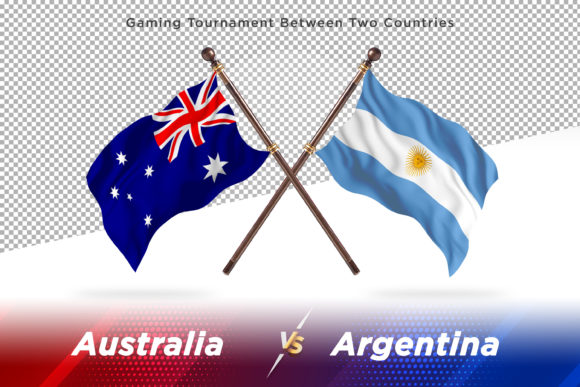
The Australian flag features a dark blue field with three primary components. In the upper hoist quadrant sits the Union Jack, acknowledging Australia's historical ties to the United Kingdom. Below the Union Jack, a large seven-pointed Commonwealth Star represents the six original states and the territories. On the fly half, the Southern Cross constellation appears in white, with four seven-pointed stars and one smaller five-pointed star. This celestial motif directly references Australia's geographical position in the Southern Hemisphere.
The flag's proportions are officially defined as 1:2, and the colours—blue, red, and white—carry no official symbolic meaning beyond their heraldic traditions. However, the deep blue is often associated with the ocean surrounding the continent and the vast Australian sky. When examining Australia versus Argentina two flags, the Australian design deliberately layers multiple identities: colonial, national, and geographic.
The Argentine Flag: Sky, Clouds, and a Sun with a Face
Argentina's flag consists of three horizontal bands: light blue at the top and bottom, with a white band in the center. At the center of the white band sits the Sun of May (Sol de Mayo), a golden sun with thirty-two rays—sixteen straight and sixteen wavy—and a human face at its core. The light blue and white combination is said to represent the sky and clouds, though alternative accounts trace the colours to the blue and white cockades worn during the May Revolution of 1810.
The sun was added to the flag in 1818 and is based on the first Argentine coin. It symbolizes the Inca sun god Inti and the emergence of a new nation. The flag's proportions are 9:14, and the shade of blue has varied historically—from pale celeste to deeper tones—before being standardized in 2012. Unlike the Australian flag, which tells a story of federation and colonial continuity, the Argentine flag narrates a tale of rupture, revolution, and natural sublimity.
Celestial Navigation and National Aspiration
Both flags use celestial imagery, but in profoundly different ways. The Southern Cross on the Australian flag is a literal navigational aid for those in the Southern Hemisphere—it points toward the South Celestial Pole and has guided travellers for millennia. By placing this constellation on their national flag, Australians signal their geographical uniqueness and their place in the global south.
Argentina's Sun of May, by contrast, is not a navigational tool but a symbol of political and spiritual awakening. The sun with a face—a motif borrowed from Inca iconography—represents a break from European monarchy and a connection to indigenous heritage. When comparing Australia versus Argentina two flags, both use the heavens to ground national identity, but Australia points to stars for location, while Argentina points to the sun for origin.
Colonial Legacies and Independence Narratives
The Union Jack on the Australian flag remains a topic of ongoing debate. For some, it honours historical ties and democratic traditions inherited from Britain. For others, it represents a colonial past that Australia has not fully shed. Republican movements periodically call for a new flag design that removes the Union Jack, arguing that Australia's identity should stand independently.
Argentina's flag, in contrast, was born from a rejection of colonial rule. The light blue and white were chosen specifically to distinguish the revolutionary forces from the red and yellow of Spain. The Sol de Mayo explicitly invokes pre-Columbian civilizations, asserting a lineage that predates European arrival. This fundamental difference in origin stories makes Australia versus Argentina two flags a study in contrasting national psychologies—one gradualist and constitutional, the other revolutionary and symbolic.
Display Protocols and National Ceremonies
Understanding flag etiquette is essential for educators, event organisers, and business owners who host international guests or celebrate multicultural events. The Australian flag is flown on government buildings year-round and is displayed at public schools, sporting events, and national holidays such as Australia Day and ANZAC Day. The flag should be flown with the Union Jack uppermost and should never touch the ground. When flown with other national flags, all flags should be of equal size and flown at the same height.
Argentine flag protocol similarly requires respectful handling. The flag is displayed on government buildings and schools, and is central to national holidays like May Revolution Day and Flag Day (June 20). The Sol de Mayo must always face forward when the flag is displayed horizontally. An interesting observation when comparing Australia versus Argentina two flags is that Argentina's flag is often seen draped over coffins during military funerals, a practice also common in Australia though with different ceremonial details.
Digital and Commercial Use
For web designers, content creators, and marketers, flags remain powerful visual shorthand. A travel blog comparing holiday destinations might use both flags side by side to evoke distinct experiences—Australian beaches and outback adventures versus Argentine tango and Patagonian wilderness. E‑commerce sites selling international products often incorporate flag icons to indicate shipping destinations or country of origin.
Flags also appear in educational software, language-learning apps, and cultural exchange materials. A hobbyist creating a quiz on world flags would note that both Australia and Argentina use blue fields with celestial symbols, yet the overall impression differs markedly. The Australian flag feels naval and formal; the Argentine flag feels bright and revolutionary. These distinctions matter when designing culturally sensitive content.
Strengths of the Australian Flag
- Immediate geographic identification: The Southern Cross instantly places Australia in the Southern Hemisphere, distinguishing it from northern nations.
- Historical continuity: The Union Jack preserves a tangible link to Australia's constitutional heritage and membership in the Commonwealth.
- Symbolic inclusivity: The Commonwealth Star represents all states and territories, fostering a sense of national unity.
- Recognisability: Despite criticisms, the flag is widely recognised globally, especially in sporting contexts.
Strengths of the Argentine Flag
- Visual elegance: The simple tricolour design with centred sun is highly memorable and aesthetically balanced.
- Independence symbolism: The flag tells a clear story of national birth through revolution, appealing to patriotic sentiment.
- Indigenous representation: The Sol de Mayo incorporates pre-Columbian iconography, acknowledging Argentina's diverse heritage.
- Versatility: The flag works well in digital formats, merchandise, and low-resolution displays because of its simple colour blocks.
Considerations and Critiques
No flag is without controversy. The Australian flag faces ongoing calls for redesign, with critics arguing that the Union Jack is anachronistic and that the flag does not uniquely represent Australia. Many Indigenous Australians view the flag as a symbol of colonisation and prefer the Aboriginal flag or the Torres Strait Islander flag.
Argentina's flag has faced less redesign pressure, but the exact shade of blue has been a source of debate. The 2012 standardisation settled on a specific tone, but many unofficial versions still vary. Additionally, the sun's face can be difficult to reproduce accurately at small sizes, which poses challenges for digital applications. When evaluating Australia versus Argentina two flags, both designs balance tradition against the need for modern relevance.
Flags in Sport and Popular Culture
Flags often achieve their widest visibility through international sporting events. The Australian flag is ubiquitous at the Olympics, the Rugby World Cup, and cricket matches. Argentine fans are equally passionate, with the light blue and white appearing at football matches worldwide, especially during World Cup campaigns. The sight of Argentine flags waving in stadiums has become a global symbol of football culture.
Interestingly, both flags have been embraced by diaspora communities. Australian expatriates display the flag at overseas pubs and community centres, while Argentine communities abroad use the flag to maintain cultural connections. For researchers studying migration patterns, the presence of these flags in foreign cities offers tangible evidence of transnational identity.
Educational Value and Classroom Use
Teachers and educators frequently use flag comparisons to introduce lessons on geography, history, and civics. Comparing Australia versus Argentina two flags provides a natural entry point for discussing colonisation, independence, national symbols, and the role of visual design in statecraft. Students can analyse colour choices, symbolic elements, and historical contexts, developing critical thinking skills while learning about two vibrant nations.
For hobbyists and collectors, flags represent a niche but passionate area of interest. Vexillology—the study of flags—offers a structured way to understand national identity through design principles. The Australian and Argentine flags are frequently featured in collections and databases, often cited as examples of how former colonies either maintain or reject imperial symbolism.
Complexity Versus Simplicity
One of the most striking differences when examining Australia versus Argentina two flags is design complexity. The Australian flag is relatively complex, with multiple stars, a canton, and precise star-point specifications. This complexity can make the flag difficult to draw from memory, a common criticism from vexillologists who favour simpler designs. The Argentine flag, by contrast, is a model of simplicity—three horizontal bands and a central emblem—making it easy to reproduce and instantly recognisable.
However, complexity is not inherently negative. The Australian flag's layered symbolism rewards close study and carries deep meaning for those who understand its components. The Argentine flag's simplicity, while elegant, offers fewer entry points for symbolic interpretation. The trade-off between complexity and accessibility is a central tension in flag design, and these two flags exemplify it clearly.
Colour Psychology and Emotional Resonance
The deep blue of the Australian flag evokes feelings of stability, trust, and authority—qualities associated with constitutional monarchy and parliamentary democracy. The light blue of the Argentine flag is more ethereal, suggesting openness, idealism, and aspiration. White appears in both flags but functions differently: in Australia, it outlines the stars and provides contrast; in Argentina, it forms a central band that symbolises peace and cloud cover.
The gold of the Sol de Mayo adds warmth and energy, while the Australian flag's red from the Union Jack injects a note of historical gravity. These colour choices are not arbitrary; they reflect national temperaments and historical trajectories. For business owners and marketers looking to align their brands with either nation, understanding these colour associations can inform design and messaging strategies.
Sourcing and Displaying Flags
For event planners, cultural centres, and international businesses, sourcing high-quality flags is essential. Australian flags are widely available through government suppliers and commercial vendors, with strict guidelines on material, dimensions, and colour accuracy. Argentine flags are similarly standardised, though the specific blue shade should be verified against official specifications to avoid using an outdated or incorrect tone.
Digital creators working with Australia versus Argentina two flags should ensure that colours are rendered correctly across devices. The Australian flag's blue is dark (approximately Pantone 280 C), while Argentina's light blue is much paler (Pantone 284 C). Using incorrect colours can make digital assets appear unprofessional, particularly in educational or commercial contexts.
Licensing and Cultural Sensitivity
Both flags are in the public domain for most uses, but cultural sensitivity is paramount. The Australian flag should not be used in contexts that trivialise military service or national institutions. The Argentine flag carries particular resonance for those who lived through periods of political turmoil, and its use in commercial contexts should be respectful. For content creators, including both flags in comparative content requires balanced treatment that acknowledges each nation's unique history without favouritism.
Observations on Future Evolution
Flags are not static. The Australian flag may one day change if the nation becomes a republic, though any redesign would be contentious. Argentina's flag is less likely to change fundamentally, but debates about colour standardisation and indigenous symbolism continue. For researchers and educators, tracking these conversations offers insight into how national identities evolve. The comparison of Australia versus Argentina two flags remains relevant precisely because both nations continue to ask what their flags mean—and what they should mean in the future.
In classrooms, boardrooms, and digital studios, these two flags serve as more than decorative elements. They are documents of national character, encoding centuries of history in simple visual forms. Understanding them deeply enriches our appreciation of both nations and the diverse ways that human communities choose to represent themselves to the world.