Austria Versus Uruguay Flags: A Study in Design, Symbolism, and Practical Use
National flags are among the most recognizable symbols in the world, yet their visual language is often more complex than it first appears. When examining the Austria versus Uruguay flags side by side, one encounters two distinct approaches to national identity through design. The Austrian flag with its simple tricolor of red-white-red, and the Uruguayan flag with its intricate combination of a golden sun, blue stripes, and white field, represent contrasting philosophies in flag design. For educators, designers, vexillologists, and anyone involved in international representation, understanding these differences goes beyond mere aesthetics—it touches on history, material science, reproduction standards, and even psychological impact on viewers.
First Impressions: Visual Weight and Immediate Recognition
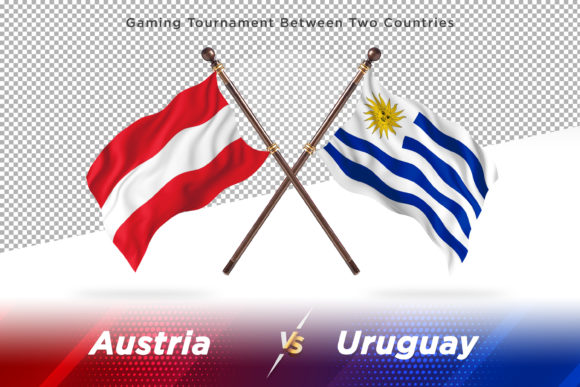
The initial encounter with Austria versus Uruguay flags reveals fundamentally different strategies for grabbing and holding attention. Austria's flag employs a classic triband design, one of the oldest national flag patterns in use, with horizontal stripes of red, white, and red. This layout creates a strong, symmetrical visual that registers almost instantly even at a distance or in peripheral vision. The high contrast between the bold crimson and the bright white ensures that the flag reads clearly whether flapping in wind or hanging limp.
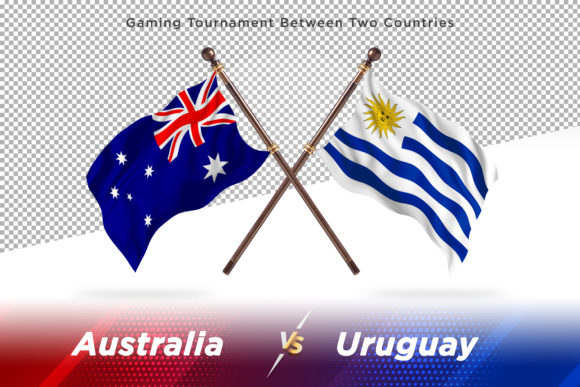
Uruguay's flag, by contrast, presents a more segmented visual experience. Nine alternating white and blue stripes—the same number as the country's original departments—run horizontally, with a white canton in the upper hoist corner containing the Sun of May. This sun emblem, with its sixteen alternating straight and wavy rays and a human face at its center, draws the eye into a more deliberate viewing process. The Austria versus Uruguay flags comparison here highlights a key trade-off: immediate recognition versus layered storytelling. Austria's design prioritizes speed of identification, while Uruguay's encourages closer inspection and rewards repeat viewing with new details.
For practical applications, this distinction matters. In contexts where flags are seen briefly—such as at sporting events, in parade bunting, or as small icons on digital maps—the Austrian design performs exceptionally well. Uruguay's flag, however, offers greater richness for ceremonial displays, educational materials, and settings where viewers have time to engage with the symbolism.
Color Psychology and Material Reality in Both Flags
When working with the Austria versus Uruguay flags, color is not merely a decorative choice but a functional consideration. Austria's red and white scheme derives from the Babenberg dynasty and, according to legend, was inspired by a blood-soaked white tunic. The red in the Austrian flag typically appears as a deep, warm crimson (often referenced as Pantone 186 C or similar), which carries associations of strength, sacrifice, and vitality. The white stands for peace, honesty, and the Danube River's pristine waters. This two-color palette is exceptionally forgiving across materials—it reproduces well in cheap fabrics, digital screens, embroidery, and even in single-color applications like black-and-white printing where the contrast remains distinguishable.
Uruguay's flag presents a more demanding color workflow. The blue stripes—officially specified as a sky blue or celeste—must be consistent to maintain the flag's intended calm, serene identity. This blue, associated with the sky over the River Plate and with clarity and vigilance, is notoriously difficult to match across different production methods. Screen printing, dye sublimation, woven polyester, and cotton all render this particular blue slightly differently. The golden yellow of the Sun of May introduces a second color that must hold its own against both the white canton and the blue stripes. Anyone involved in manufacturing or specifying the Austria versus Uruguay flags must account for these material sensitivities: Austria's flag is robust across media, while Uruguay's demands strict color management protocols.
The Sun of May: A Study in Symbolic Complexity
Perhaps the most striking difference in the Austria versus Uruguay flags is the presence of a detailed emblem versus pure geometry. Uruguay's Sun of May is a direct inheritance from the flag of Argentina (both countries use variations of the same symbol, though Uruguay's has a distinct face and ray configuration). It represents the Inca sun god Inti and commemorates the May Revolution of 1810 that began the fight for independence from Spain. The face on the sun—with its calm, almost solemn expression—adds an anthropomorphic element that is relatively rare in national flags. This feature creates a unique emotional connection for viewers, but it also introduces reproduction challenges. At small scales, the eyes, nose, and mouth can become indistinct blobs. In embroidery, the fine details require denser stitching, increasing cost and production time.
Austria's flag, lacking any emblem, avoids these issues entirely. The absence of a symbol is itself a symbolic statement—it suggests a nation secure enough in its identity to be represented by geometry alone. For vexillologists studying the Austria versus Uruguay flags, this contrast illustrates a spectrum running from minimalist abstraction to representational art. Uruguay's flag tells a story that requires interpretation; Austria's flag conveys identity through pure form. Each approach has its advocates, and each suits different national narratives.
Proportion, Layout, and the Physics of Display
Flag dimensions are not arbitrary, and the Austria versus Uruguay flags follow different proportional conventions that affect how they behave in the wind. Austria uses a standard 2:3 ratio (width to length), which is common among European flags. This squarer proportion means the flag fills less horizontal space for a given vertical height, making it easier to mount on poles, hang in windows, or display in confined areas. The horizontal stripes remain wide and distinct even when the flag is only partially unfurled.
Uruguay's flag also uses a 2:3 ratio officially, but the presence of nine thin stripes and a canton changes how the flag reads under dynamic conditions. The stripes, being narrower than Austria's bands, can seem to blur together when the flag is moving rapidly. The canton, occupying the upper hoist quadrant, is weighted toward the pole, which affects how the flag drapes and catches wind. For those who manufacture or specify the Austria versus Uruguay flags, the Uruguayan design requires higher-quality fabric and stitching to ensure the stripes and sun remain legible over the flag's lifetime. Austria's simpler geometry can tolerate more wear before becoming unrecognizable.
Historical Layers and National Narratives
Understanding the Austria versus Uruguay flags fully requires acknowledging the historical weight each carries. Austria's flag is one of the oldest continuously used national flags, with roots stretching back to the 13th century. It survived the Habsburg monarchy, the Austro-Hungarian Empire, the interwar period, and the Anschluss. The flag's re-adoption in 1945 after World War II was a deliberate choice to connect the modern republic with its medieval origins, bypassing the Nazi era entirely. For historians and educators, this flag is a symbol of continuity and resilience.
Uruguay's flag is younger but no less layered. It was adopted in 1830, shortly after the country's independence, and the nine stripes commemorate the nine original departments of the nation at that time. The Sun of May references both the Inca heritage and the broader Latin American independence movement. Over the years, the flag has been modified subtly—the sun's face has been standardized, and the shade of blue has shifted—but the essential design has remained stable. Comparing the historical trajectories embedded in the Austria versus Uruguay flags reveals how nations use flags to anchor themselves in chosen pasts. Austria reaches back to medieval heraldry, while Uruguay aligns itself with a regional revolutionary movement.
Practical Use Cases for Both Flags
For businesses and organizations that deal with international representation, knowing when to deploy the Austria versus Uruguay flags is a matter of both protocol and practicality. At embassy functions, United Nations meetings, and international conferences, both flags appear side by side, and their differing visual weights can influence how they are positioned. The Austrian flag, with its bold red-white-red, commands attention in a lineup of flags. The Uruguayan flag, with its more intricate pattern, benefits from being placed where it can be seen up close—for example, on a table flag or a podium banner rather than a distant rooftop pole.
For event planners, the Austrian flag is easier to source and produce in bulk. Its simple tricolor can be quickly printed, sewn, or painted onto almost any surface. The Uruguayan flag, with its multiple stripes and detailed sun, requires more careful fabrication and is harder to find in stock. When ordering custom runs, lead times and costs are typically higher for Uruguay's flag. For educators teaching flag design or Latin American history, the Uruguayan flag offers rich material for discussion about symbolism, while the Austrian flag provides a clean example of how simplicity can achieve powerful recognition.
In digital applications—websites, mobile apps, social media profiles, and video overlays—the Austria versus Uruguay flags behave differently at small sizes. Austria's flag remains identifiable even when reduced to a 16x24 pixel favicon. Uruguay's flag, at the same tiny scale, loses the sun's facial features and the stripes may alias into visual noise. UX designers and UI developers should account for these limitations when designing interfaces that display multiple national flags. Providing a larger display area for Uruguay's flag, or using a simplified icon version for very small sizes, ensures that the flag remains recognizable and respectful.
Material Considerations for Long-Term Display
Flags exposed to the elements face UV radiation, wind stress, rain, and temperature fluctuations. The Austria versus Uruguay flags respond to these stresses differently due to their design complexity. Austria's flag, with only two colors and broad horizontal bands, can be made from heavier, more durable materials without losing detail. The contrast between red and white remains strong even as the fabric fades over time. Repairs and replacements are straightforward because the pattern is simple.
Uruguay's flag requires more careful material selection. The thin blue stripes demand fabric that holds color well, as fading can cause the stripes to blend into the white. The sun emblem, if embroidered or appliquéd, adds weight and stiffness to the canton, which can cause the flag to hang awkwardly or stress the stitching around the emblem. For outdoor use, Uruguay's flag benefits from lighter-weight nylon or polyester that allows the entire flag to move fluidly. For indoor ceremonial use, a heavier cotton or blend provides a richer drape and better showcases the sun's details. Anyone involved in procurement for the Austria versus Uruguay flags should match the material to the display context to maximize both longevity and visual impact.
The Role of Flag Protocol and Etiquette
Both countries follow standard international flag etiquette, but the differences in the Austria versus Uruguay flags create unique considerations. When displayed vertically, Austria's flag is simply rotated 90 degrees, and the red-white-red stripes become vertical—still immediately recognizable. Uruguay's flag, when hung vertically, should have the canton in the upper left from the observer's perspective, which means the sun remains upright and the stripes adjust accordingly. This vertical display protocol is less intuitive for Uruguay's flag and must be remembered by anyone handling it in formal settings.
For those teaching flag etiquette, the Austrian flag offers a straightforward case: the design is so simple that mistakes are rare. The Uruguayan flag demands more attention to detail. Folding protocols also differ. Austria's flag can be folded into a simple rectangle, with the red and white bands aligning neatly. Uruguay's flag requires careful folding to avoid creasing the sun's face or misaligning the stripes. These practical details may seem minor, but for diplomats, military personnel, and ceremonial officers, they are part of daily professional competence.
Observations from Real-World Use
In my experience working with flags for educational exhibitions and cultural events, the Austria versus Uruguay flags elicit noticeably different reactions from viewers. The Austrian flag is often recognized quickly but elicits less prolonged interest—its simplicity is its strength, but it offers less to examine. The Uruguayan flag, however, provokes questions: observers ask about the sun, the stripes, the face, and the historical meaning. This makes Uruguay's flag a superior tool for educational settings where engagement and discussion are the goals.
For a recent multicultural fair, I displayed both flags side by side with informational placards. The Austrian flag's placard focused on design history and the concept of minimalism in national symbols. The Uruguayan flag's placard explained the Sun of May, the nine departments, and the connection to the independence movement. The two displays complemented each other perfectly, demonstrating that there is no single "best" flag design—only designs suited to different purposes. The Austria versus Uruguay flags comparison, in practice, becomes a lesson in how nations choose to represent themselves and how those choices affect the people who see them.
Future Trends and Digital Representation
As digital media continues to dominate how people encounter national symbols, the Austria versus Uruguay flags will likely evolve in their usage. Austria's flag, with its simplicity, is ideally suited for the fast-scrolling, small-screen world of social media and mobile interfaces. It works well as an emoji, a profile picture frame, or a background element in video calls. Uruguay's flag, while more challenging at small scales, benefits from the ability to zoom, hover, and animate in digital environments. Interactive maps and educational websites can provide tooltips and clickable regions that reveal the sun's details and the stripes' meanings in ways that physical flags cannot.
For creators and designers working with flags, the key takeaway from the Austria versus Uruguay flags is that context dictates design value. A flag that excels at 50 meters on a pole may not work at 50 pixels on a screen. A flag that tells a rich story may confuse viewers at a glance. By understanding the strengths and limitations of each design, professionals can make informed choices about when and how to use them. Whether you are a teacher, a graphic designer, a procurement specialist, or a curious observer, the flags of Austria and Uruguay offer a compact, elegant lesson in the art and science of national symbolism.