Austria Versus Zimbabwe Two Flags: Design, Symbolism, and Practical Use
Flags are far more than pieces of fabric. They encapsulate history, identity, and national pride in a single visual statement. When comparing Austria versus Zimbabwe two flags, the contrast is immediate and striking. One is a minimalist emblem of medieval heritage; the other is a richly layered symbol of independence and natural wealth. Understanding what each flag represents—and how they function in real-world contexts—can help designers, educators, business owners, and travelers make informed choices about flag use, display, and interpretation.
What Makes the Austrian Flag Distinctive?
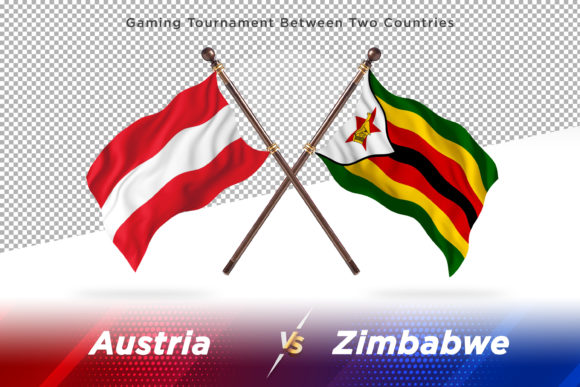
The national flag of Austria is one of the oldest national flags in continuous use. Its design is deceptively simple: three horizontal bands of red, white, and red. According to legend, this pattern dates back to the 12th century and the Duke of Austria, whose white tunic became stained with blood, leaving a white stripe where his belt had been. Whether the story is fact or folklore, the flag’s minimalism is its defining feature.
Design and Color Specifications
- Proportion: 2:3 ratio
- Stripes: Three equal horizontal bands (red, white, red)
- Red shade: Standard heraldic red (often Pantone 186 C or similar)
- White shade: Pure white
- Variants: The civil flag lacks the coat of arms; the state flag includes the Austrian eagle
The Austrian flag’s strength lies in its clarity. It is instantly recognizable even at a distance, from a fluttering pole or a digital thumbnail. For business owners sourcing flags for international events or graphic designers incorporating national symbols into branding materials, the Austrian flag is straightforward to reproduce accurately. There are no intricate emblems, multiple colors, or complex gradients to manage.
Decoding the Zimbabwe Flag
In striking contrast, the flag of Zimbabwe is a dense tapestry of meaning. Adopted in 1980 upon independence, it replaces colonial symbols with a distinctly African identity. When placed side by side with the Austrian flag, the differences are not merely aesthetic—they reflect entirely different historical narratives.
Elements of the Zimbabwe Flag
- Seven horizontal stripes: Green, gold, red, black, red, gold, green
- White triangle at the hoist side
- Red star inside the triangle
- Zimbabwe Bird (the national emblem) in gold on the white triangle
- Proportion: 1:2 ratio
Each color carries intentional symbolism. Green represents agriculture and natural resources. Gold stands for mineral wealth. Red honours the blood shed during the liberation struggle. Black signifies the majority population and African heritage. The white triangle symbolizes peace, the red star reflects socialism and revolutionary aspirations, and the Zimbabwe Bird—carved from soapstone at Great Zimbabwe—connects the modern nation to its pre-colonial civilization.
Comparing Austria Versus Zimbabwe Two Flags: Core Differences
When you place Austria versus Zimbabwe two flags side by side, the most immediate difference is visual density. Austria’s flag is spare and geometric; Zimbabwe’s is pictorial and narrative. This is not a matter of better or worse—it is a matter of purpose and context.
Visual Recognition and Usability
For practical applications such as event decoration, website icons, or merchandise printing, the Austrian flag reproduces cleanly at any size. It scales down to a favicon without losing clarity. The Zimbabwe flag, by contrast, requires careful reproduction to ensure the bird, star, and stripes remain distinguishable, especially at small sizes. Online content creators using flags in thumbnails, infographics, or social media posts should account for this difference. A Zimbabwe flag at 32×64 pixels may lose its bird detail unless rendered with precision.
Cultural Weight and Storytelling
The Zimbabwe flag is dense with storytelling. Every element invites explanation. For educators teaching African history or museums curating exhibitions, the flag serves as a rich entry point into discussions about decolonization, identity, and national pride. The Austrian flag tells a different story—one of continuity, medieval roots, and European heraldic tradition. Neither narrative is more important, but they serve different educational and communicative functions.
Scenario 1: International Sporting Events
Imagine a multinational sports tournament. Volunteers need to hang flags quickly and correctly. The Austrian flag is easy to handle: red-white-red, no orientation confusion. The Zimbabwe flag requires attention to the hoist side and the correct placement of the triangle. For event organizers, training staff on flag handling and display etiquette becomes more important when flags carry complex designs. Mistakes—such as hanging the flag upside down or with the bird reversed—can be perceived as disrespectful, so clear guidelines are essential.
Scenario 2: Retail and Merchandise
A small business selling travel-themed products might offer flag patches, mugs, or T-shirts. For the Austrian flag, production is straightforward: two red stripes and one white stripe. For the Zimbabwe flag, screen printing must accurately capture the bird and star. Business owners considering product lines should weigh the costs of multi-color versus two-color designs. The Zimbabwe flag typically requires more screens, more passes, and thus higher unit costs. However, for customers with personal ties to Zimbabwe, the added detail is meaningful and can justify a premium price.
Scenario 3: Digital Design and UI
Web designers building a directory of international flags or a travel app face different challenges. The Austrian flag is a low-bandwidth, high-clarity asset. It loads quickly and reads well on mobile screens. The Zimbabwe flag requires a vector format to ensure the bird and star render crisply across devices. UI/UX professionals should test both flags at typical interface sizes (e.g., 24×16 pixels for a dropdown menu) to confirm legibility. For the Zimbabwe flag, a simplified flat version without fine bird details may be necessary for very small displays.
Austrian Flag Strengths
- Simplicity: Easy to reproduce, remember, and recognize
- History: One of the oldest flag designs still in use, lending gravitas
- Versatility: Works in any medium, from embroidery to digital
- Low error rate: Minimal risk of incorrect display
Zimbabwe Flag Strengths
- Symbolic depth: Every element tells part of the national story
- Distinctiveness: Highly memorable due to the bird motif
- Cultural resonance: Deeply meaningful for Zimbabweans and diaspora
- Educational value: Sparks curiosity and conversation
Practical Limitations
The Austrian flag’s simplicity can be a double-edged sword. It may be confused with other red-white-red horizontal tricolours, such as the flag of Indonesia (though Indonesia’s stripes are reversed) or Poland (white-red). In certain lighting conditions, the red bands can appear similar to those of other European flags. The Zimbabwe flag, on the other hand, is prone to reproduction errors. The bird’s posture and proportions vary in unofficial versions, and the red star can be mistaken for socialist symbolism without the context of Zimbabwe’s liberation history. For professionals sourcing flags for official use, purchasing from reputable manufacturers who follow national specifications is crucial.
Evaluating Suitability for Different Needs
When deciding between using the Austrian flag or the Zimbabwe flag for a project—or comparing them as design case studies—consider these criteria:
- Scale of reproduction: At small sizes, simpler flags perform better. If your medium is a pin or a small icon, the Austrian flag is more forgiving.
- Audience familiarity: For a general international audience, the Austrian flag may be more instantly recognizable. For an audience with African studies interest, the Zimbabwe flag offers richer engagement.
- Symbolic intent: If your content or product aims to convey historical depth, the Zimbabwe flag provides more material. If you need a neutral, clean national marker, the Austrian flag serves well.
- Cost and production complexity: Two-color printing versus multi-color with fine detail directly impacts budget and timeline.
- Cultural sensitivity: Always verify the correct display orientation and color specifications for both flags. Misrepresentation can undermine credibility and respect.
Why Understanding Austria Versus Zimbabwe Two Flags Matters
For general consumers purchasing flags for home display, for travelers documenting their journeys, or for business owners marketing to diverse audiences, the differences between these two flags are not trivial. They reflect broader principles of design, meaning, and utility. A flag can be a logo, a history lesson, a political statement, or a cultural artifact—sometimes all at once.
By examining Austria versus Zimbabwe two flags in parallel, we gain insight into how nations choose to represent themselves. Austria’s flag says: We have endured, we are stable, we are defined by our origins. Zimbabwe’s flag says: We have struggled, we are rich in resources and heritage, we look forward with hope. Both messages are valid. Both flags deserve accurate representation and thoughtful use.
Practical Takeaways
- Always verify the official design specifications from national authorities before producing or displaying either flag.
- For digital use, prefer vector formats (SVG) for the Zimbabwe flag to preserve the bird and star details.
- When displaying both flags together, ensure they are the same physical size and flown at equal height according to international flag etiquette.
- Educate your team or audience about the symbolism behind the Zimbabwe flag—it adds value and shows respect.
- Consider the context: a minimalist Austrian flag may suit corporate or diplomatic settings, while the Zimbabwe flag may be more appropriate in cultural or historical exhibitions.
Whether you are a creator looking for inspiration, a business owner sourcing flags for an international event, or a professional designing cross-cultural content, understanding the nuances of each flag helps you communicate more effectively. The lesson from comparing Austria versus Zimbabwe two flags is that both simplicity and complexity have their place—and that the best choice depends not on which flag is "better," but on what story you need to tell.