Austria vs Saint Kitts: A Deep Dive into Two Flags
Why Compare These Specific National Flags?
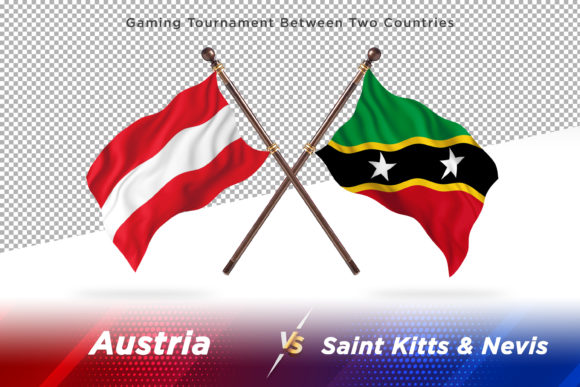
At first glance, the flags of Austria and Saint Kitts and Nevis might seem to belong to completely different worlds—and historically, they do. One represents a landlocked European nation with a rich imperial past, while the other embodies the vibrant spirit of a twin-island Caribbean federation. Yet, the exercise of placing Austria versus Saint Kitts two flags side by side offers a surprisingly rich lesson in design philosophy, historical storytelling, and national identity.
This comparison often arises in vexillology forums, quiz nights, and travel blogs because both flags are horizontal tribands, yet they approach the concept of national symbolism in starkly different ways. For a beginner, understanding why these two flags look, feel, and mean different things is a perfect gateway into the broader world of flag studies.
The Austrian Flag: A Timeless Heraldic Statement
The flag of Austria is one of the oldest national flags in continuous use anywhere in the world. Its history is deeply intertwined with the Babenberg dynasty and the Crusades. Legend has it that after a fierce battle, the white tunic of Duke Leopold V was completely drenched in blood. When he removed his sword belt, a clean white band was revealed beneath it. The Holy Roman Emperor was so impressed that he granted the duke this new color scheme.
Whether you accept the legend or prefer the official explanation, the result is a masterclass in minimalism. Three horizontal stripes—red, white, and red—create a bold, instantly recognizable design. There are no stars, no emblems, and no text. The red symbolizes strength, valor, and the blood spilled for the nation, while the white represents purity, peace, and the snow-capped Alps. For a creator or designer, this flag is a powerful example of how less can truly be more.
The Saint Kitts Flag: A Modern Symbol of Unity
In stark contrast, the flag of Saint Kitts and Nevis is one of the youngest in the world, adopted upon independence in 1983. Designed by a local student named Edrice Lewis, this flag is packed with intentional symbolism. It features a green and black horizontal background divided by a striking yellow and black diagonal band. Two white stars float within the black stripe.
Every color tells a story. The green represents the fertile land and the agricultural roots of the islands. The black represents the African heritage of the majority of the population. The yellow bands symbolize the sunshine and the Caribbean Sea that sustains the federation. The red in the black stripe represents the struggle for freedom from colonial rule. The two white stars stand for hope, liberty, and the two islands of the federation. For an educator or a student, this flag is a living textbook of post-colonial identity.
For Travelers and Digital Nomads
If you are a frequent traveler or a digital nomad hopping between European capitals and Caribbean islands, knowing the difference between these two flags is a small but meaningful sign of cultural respect. Mistaking the Austrian flag for the Saint Kitts flag in a presentation, blog post, or social media graphic can undermine your credibility. Recognizing the correct flag at an embassy, airport, or cultural event shows that you have taken the time to understand the places you visit or discuss.
For Graphic Designers and Branding Professionals
The Austria versus Saint Kitts two flags comparison is a fantastic case study for any designer. Austria’s flag is a textbook example of a simple, heraldic tricolor—easy to reproduce, highly memorable, and effective at scale. Saint Kitts’ flag, on the other hand, proves that a complex design can work if the symbolic load is balanced by strong geometric structure.
Consider this: if you were designing a logo for a luxury ski brand, you might lean toward the clean, bold lines of the Austrian aesthetic. If you were branding a tropical resort or a community-focused non-profit, the layered, meaningful color palette of Saint Kitts might offer better inspiration. This comparison helps you understand how much complexity a visual identity can handle before it becomes noise.
For Educators and Lifelong Learners
Teachers often use the juxtaposition of these two flags to break out of a Eurocentric view of history. It opens a natural discussion about the Atlantic slave trade, the push for independence in the late 20th century, and the lasting influence of European heraldry on modern state symbols. It also provides a simple, visual way to explain the difference between a historical nation-state and a modern federation.
Important Considerations Before Diving Deeper
Before you start using these symbols in your own work, there are a few things to keep in mind. First, context is everything. The Austrian flag carries centuries of weight, including connections to the Holy Roman Empire and the Austro-Hungarian Empire. The Saint Kitts flag is a proud emblem of a young nation, and its colors directly reference the Pan-African movement.
Second, avoid oversimplification. Just because both flags are tricolors does not mean they belong to the same design category. Austria uses classic heraldic tinctures, while Saint Kitts uses modern symbolic colors drawn from nature and history. Treating them as interchangeable in a design or educational context would be a missed opportunity for deeper understanding.
Finally, pay attention to color accuracy, especially if you are working in digital media. The red in the Austrian flag is traditionally a darker, heraldic crimson. The red in the Saint Kitts flag is often rendered as a brighter, more vivid hue to represent the energy of the independence struggle. Using the wrong shade can subtly distort the message you are trying to convey.
Beginner-Friendly Observations: A Side-by-Side Look
If you are a blogger, a small business owner creating localized content, or simply a curious person, here is a practical breakdown to help you internalize the differences at a glance.
Austria
- Adopted: 1230 (officially readopted in 1918)
- Design: Three horizontal stripes
- Colors: Red, White, Red
- Symbolism: Strength, purity, and historical continuity
- Memorability: Extremely high due to its simplicity
Saint Kitts and Nevis
- Adopted: 1983
- Design: Diagonal band with two stars
- Colors: Green, Black, Yellow, Red
- Symbolism: Fertility, African heritage, sunshine, struggle for freedom
- Memorability: High due to the unique diagonal and star placement
Ultimately, the conversation around Austria versus Saint Kitts two flags is not about competition. It is about celebrating how different societies choose to represent themselves. Whether you are planning a trip, designing a brand, or teaching a classroom, understanding the heart of these flags adds a layer of richness to your worldview. The next time you see them flying, you will not just see stripes and stars—you will see a thousand years of history and the bright dawn of a young federation standing side by side.